Design and Build Quality
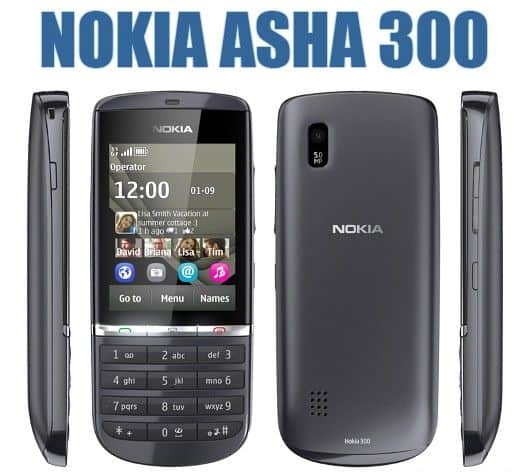
The Nokia Asha 300 kind of mixes a familiar look with some more modern touches, kind of showing Nokia’s focus on style plus function, not just one or the other. It comes in that candybar style , which was really common for feature phones around the time it showed up.
Dimensions and Weight
When it comes to size, it measures 112.8 x 49.5 x 12.7 mm , and it weighs around 85 g. So yeah it stays compact and light, you can grab it and go without feeling like you are carrying a brick. The slim shape also helps with everyday handling, it fits nicely in a pocket or in your hand. Build quality feels firm enough , the plastic body has a sturdy vibe and it seems put together in a careful way.
Material and Construction
On the outside you get both matte and glossy surfaces, this little mix makes the phone look more interesting than plain plastic. The front area is basically taken over by a 3.0-inch touchscreen, and the back has a textured finish so it does not slip as easily. Below the display, there’s the keypad, and the keys are spaced out in a comfortable way. The buttons have that tactile feel, so typing feels responsive and satisfying. Overall the workmanship is pretty solid for a feature phone, though it can’t really compete with the premium feel you get from higher-end smartphones, you know the kind.
Color and Design Options
The Nokia Asha 300 came in multiple colors like classic black, bright pink, and a quieter white. Those options let people match the device to their own mood or vibe. With the clean lines and simple styling, plus those colors, it had an appeal that reached a pretty wide range of users.
Display and User Interface
The Nokia Asha 300 has a 3.0-inch TFT touchscreen, with a resolution sitting at 240 x 400 pixels. It’s not really high-definition, but for what the phone was meant to do , the display works pretty well. The touchscreen feels responsive, and overall you get a decent user experience though it’s definitely limited compared with what modern smartphones bring.
Screen Quality
Color reproduction is decent, the tones look bright and lively, so images and videos feel more engaging. That said, the resolution can cause noticeable pixelation, mainly when you try to view fine details. In direct sunlight, glare may reduce clarity , still the brightness controls help a bit so readability isn’t totally lost.
User Interface
The user interface on the Nokia Asha 300 is built to feel intuitive, and honestly pretty friendly. It runs Nokia Series 40 (S40) , which keeps things simple and not overcomplicated. The main menu uses large icons, so moving around is easier even if you’re not super experienced. The touchscreen supports the physical keypad, so you can mix tap navigation with typing.
Customization
There’s some customisation on the Asha 300, like changing themes , wallpapers and ringtones. You can also add your own flair to the home screen with widgets and shortcuts, that little bit of flexibility makes the day to day experience feel more personal, or honestly less generic.
Performance and Usability
The Nokia Asha 300 aims to deliver a smooth experience for routine tasks, calling, texting, and general multimedia use. Performance is generally steady and dependable , even if it can’t really compete with newer smartphones. Still, for its target audience and era, it holds up in everyday usage.
Processing Power
The Asha 300 is powered by a 1 GHz single-core processor , which at the time was pretty fast for a feature phone. With this chip, the device can manage simple stuff pretty well, like browsing , playing music, and basic application handling. That said, it may start feeling sluggish if you try to juggle several tasks, all at once, or keep too many apps running in the background.
Memory and Storage
You get 140 MB of internal storage, and yes it’s expandable thanks to a microSD card slot. The slot supports microSD cards up to 32 GB, so there’s enough breathing room for music, photos, and other files, without constant housekeeping. On top of that, the phone includes 128 MB of RAM , which is basically enough for running the Series 40 operating system and its usual applications, at a steady pace.
Battery Life
The Nokia Asha 300 comes with a 1,230 mAh battery, and overall it’s known for good endurance for this type of phone. In normal day to day use, including calls, texting, and occasional media playing, it can last as long as a week on one charge. The power management is fairly efficient , so you can go longer between recharges , rather than plugging it in all the time.
Camera and Multimedia
On the back, there’s a 5-megapixel camera , that gives you pretty direct photo and video options. It’s not the sort of camera you’d put up next to modern smartphones, but it’s rather good for calm snapshots and everyday multimedia moments.
Photo Quality
The camera’s photo quality is kinda acceptable for a feature phone , with pretty reasonable sharpness and detail though. Still, in low light the images can end up with noise, and overall clarity drops a bit. The camera also has a few basic shooting modes like portrait and landscape , which generally helps users get better results depending on the situation.
Video Recording
For the Asha 300 , video recording is limited to QVGA resolution (320 x 240 pixels). So the footage comes out okay for casual sharing but it doesn’t have the crispness and fine detail you’d expect from higher definition recordings. In other words, video quality is fine for a feature phone , yet it doesn’t quite match the bar modern smartphones set.
Music Player
The music player is honestly one of the better parts of the Asha 300, and it shows Nokia’s whole multimedia focus. The device comes with a built in audio player that handles several formats , including MP3 , AAC , and WAV. You also get things like an equalizer and playlist management , so listeners can tweak their vibe. On top of that, the music player links up with the FM radio feature, and that radio supports RDS (Radio Data System) which gives extra info during broadcasts.
FM Radio
The Asha 300’s FM radio feature lets you listen to favorite stations while moving around. It includes RDS support, so it can display station names and even song titles. Overall the FM radio gives the phone more flexibility, for people who really enjoy live radio listening rather than just stored music.
Connectivity and Network
The Nokia Asha 300 has a set of connectivity ways, but honestly it feels quite limited vs newer smartphones. It does work on 3G networks (UMTS) , so you get quicker data movement compared to 2G phones, which is kinda the main advantage here.
Bluetooth
There is Bluetooth 2.1 support, so you can do wireless linking with other compatible gadgets, like a headset or speakers , and even pair it with another phone. This helps with hands free calls and wireless audio streaming , so the phone becomes more useful for tunes and everyday talk.
USB and Data Transfer
On the side you’ll find a microUSB port for charging and for wired data transfer. Using the USB link you can sync music , pictures, and other files to a computer, and yes charge the phone at the same time. The transfer speed is decent for a feature phone, though it ends up slower than modern expectations, so don’t expect any fast miracles.
Internet Connectivity
For the web, the Asha 300 relies on 3G connectivity, which generally means better browsing speeds than 2G devices. It includes a basic browser, letting users open mobile web pages and handle simple online needs. Still, the experience is held back by the screen resolution and the processing power, so it’s not ideal for heavy or complex web surfing.
Usability and Performance
Overall, the Nokia Asha 300 is made to feel steady and easy to use for its usual jobs. You get the mix of a responsive touchscreen together with a physical keypad, which gives more options for moving through menus and typing, sometimes you want one, sometimes the other.
Ease of Use
The phones user interface is pretty straightforward, and it feels easy to move around in, with a layout that works for users of pretty much any experience level. There’s a physical keypad ,with buttons that are spaced out nicely which makes typing feel more comfortable, and then the touchscreen kinda ties in with it, for extra control when you need it. Overall performance is usually reliable, smooth enough for everyday stuff like making calls, sending messages, and playing media, no big drama there.
Application Support
The Asha 300 gets support for a set of apps you can grab through Nokia’s Ovi Store, so think games, utilities, and also productivity style tools. Yes the catalog is more limited than what you’d get on smartphone app stores, but still, users can locate enough applications to expand what the device can do, kind of useful if you like tinkering, or just want extra options.
Customization
You can customize the device a bit, including swapping themes, wallpapers, and ringtones. People can also personalize the home screen using widgets and shortcuts which adds a small but noticeable flexibility to how the phone looks and behaves. It’s not full freedom, but it’s enough to make it feel a little more yours.
Impact and Legacy
The Nokia Asha 300 is one of those key points in how feature phones evolved, it shows what Nokia was trying to do ,combining a classic look with more modern everyday functions. It probably didn’t create the same buzz as some other Nokia releases, or as much as current smartphones do ,but it still stands out as a good example of Nokia’s affordable yet feature-rich approach to mobile tech.
Market Reception
When it came out, the Nokia Asha 300 got a decent kind of feedback, for its design, for its multimedia focus, and for that 3G connectivity too. It kind of appealed to people who wanted a feature phone but also music and multimedia kept in the spotlight, and in that way it offered a balance between style and functionality, at a price that felt reasonable.
Comparison with Competitors
In the feature phone market, the Nokia Asha 300 sort of had to share attention with other phones that basically did the same kinds of things. People were looking at the Samsung Corby series and various Sony Ericsson models too. If you put them side by side, the Asha 300 looked more noticeable, mainly because of its 3G connectivity , a touch interface, and overall multimedia functions. It also had Nokia’s own music features mixed in and the interface felt pretty simple to use. That combo, kind of helped the Asha 300 reach a lot of different buyers.
Cultural Impact
In the early 2010s, phones like the Nokia Asha 300 did really well in places where smartphones were still not super common or just not affordable. The Asha 300 fit into that moment, especially with the Walkman branding and the multimedia options. For many users, it matched the idea of a dedicated music and entertainment gadget , not “yet” a full smart device.
It also mattered to Nokia as part of a larger plan to stay relevant in feature phones, while the company was slowly moving toward smartphones. You could think of the Asha 300 as a bridge for people who wanted modern options, but didn’t want to jump all the way into a full smartphone. And for a bunch of users, it was a reachable cost way to get parts of digital life, music, plus internet browsing, without having a huge learning curve or feeling like the tech was too advanced.
Key Strengths
1. Music-Focused Features: The Nokia Asha 300’s music abilities were, honestly, one of the clearest selling points. It felt like an extension of Nokia’s portable music heritage, with the Walkman brand being right there too. There was also TrackID, and the music player itself was presented in a pretty intuitive way. On top of that it came with an FM radio option , and the RDS functionality made it even more useful for everyday listening and multimedia enjoyment.
2. Dual input options: the mix of a touchscreen and a physical keypad kinda let people use the device in a few different ways. having both at once , it gives users flexibility, for instance some folks liked the tactile feedback you get when typing, others just really enjoyed touch controls more, you know.
3. Compact and lightweight design: the Asha 300 ’s compact design and lightweight build made it pretty convenient and easy to carry. the slim profile together with its sturdy construction helped ensure it was simpler to take along and use on the go, without totally giving up durability.
4. Expandable storage: with support for microSD cards up to 32 GB, the Asha 300 provided decent room for music, photos, and other kinds of media. this expandable storage mattered a lot for users who felt constrained by internal memory, like it was never quite enough for their stuff.
5. Battery life: the phone’s battery life was honestly one of its standout points. powered by a 1,230 mAh battery, the Asha 300 could last several days on a single charge, depending on how heavily it was used. that kind of reliability was especially liked by people who needed a handset that could go the distance, without recharging all the time.
Areas for Improvement
1. Camera Limitations: The 5-megapixel camera was, kind of, a highlight back then, but honestly the output stayed pretty limited when you compare it to today’s smartphones. You don’t really get the newer camera comforts like autofocus or high-definition video capture, so photo and video sharpness ended up being less satisfying . Also, in darker rooms or at night the camera’s ability was just more strained than you’d hope.
2. Display Resolution: The 3.0-inch screen came with 240 x 400 pixels, which means the pixel density was on the lower side. That usually leads to text that looks a bit less clean and images that feel less crisp. Even if the touchscreen response was steady , the overall display quality still couldn’t match smartphones , or even some other feature phones that were competing at the time.
3. Limited Connectivity: The Asha 300 did offer 3G connectivity , but it didn’t include 4G support. Because of that, web browsing could feel slower and the data side didn’t quite perform like people expected once 4G became common. Over time, since more users and towers moved forward, the connectivity choices started feeling rather old.
4. Operating System Constraints: The Nokia Series 40 , or S40, system worked and was usable , but it had boundaries around apps and day to day speed. Compared with more modern smartphone operating systems, the app support was narrower, and that mattered a lot for anyone who wanted extra features beyond the basic stuff. For more advanced functionality, users really had to go elsewhere.
5. User Experience with Modern Apps: As apps changed and web standards kept evolving , the Asha 300’s hardware and software started showing their limits. It had trouble keeping up with more demanding applications and newer web pages, so for people looking for a full smartphone style experience, this device became less and less convincing.
Legacy and Influence
The Nokia Asha 300’s legacy is mostly about being one of those transitional devices in Nokia’s lineup. It was Nokia trying to bridge the gap between regular feature phones and the coming smartphones , but still keep a pretty sharp focus on multimedia and the day to day user experience . Even with all its limitations , the Asha 300 was still a decent, well-regarded device back then , especially for people who wanted a stylish phone that also felt practical , with music kind of at the center of it.
In the wider mobile tech story , the Asha 300 also shows how feature phones kept evolving and what they were really doing during that transition period. It kind of illustrates how brands like Nokia adapted to shifting market demands, while still giving users more affordable choices , and at the same time staying feature-rich. You could say it was an inventive step, even if it wasn’t fully the same as what later advanced devices offered.
Conclusion
The Nokia Asha 300 kind of sticks out as a rather solid example of a feature phone that was built with multimedia in mind, plus that “how does it feel to use” kind of focus. The way it blends a responsive touchscreen with the physical keypad, and then adds music-centric features, made it a go to option for people who wanted both the classic way of doing things and a more modern touch— all inside a compact, clean looking device.
Of course, it still had some problems too, like camera quality that doesn’t quite shine, a display resolution that feels limited, and connectivity options that are not as broad as you might expect. Even so, the Asha 300 really performed well in other spots: battery life was strong, the expandable storage helps a lot, and the overall build quality feels dependable. In the bigger picture, its place in Nokia’s mobile plan, and the influence it had on the feature phone market, shows why it matters as a transitional model during a time when technology was moving fast.
For anyone who enjoys the calm, straightforward reliability of feature phones, the Nokia Asha 300 gives a fairly persuasive blend of function and style. And yeah, its legacy basically reminds us how mobile technology evolved, while also showing that there’s still appeal in devices made for specific habits and preferences.
Nokia Asha 300 Red Touchscreen Unlocked QuadBand 3G Cell Phone: Buy it now
Nokia – Asha 300 Gray Touchscreen Unlocked QuadBand 3G Cell Phone: Buy it now
Nokia Asha 300 (Arabic + English Keypad) Factory Unlocked Smartphone – International Version with No Warranty (Red NV Levant): Buy it now
Related Posts



Tech Reviewer & Product Analyst
Định Bia has spent over 10 years testing consumer electronics with a focus on smart technology. He work as a product advisor at Biareview where he helped customers find the right devices for their needs. He personally tests every product featured on this site using a consistent evaluation framework covering quality, durability, and value. All reviews are based on experience, not influenced by the manufacturer.