Design and Build Quality
Aesthetic and Materials
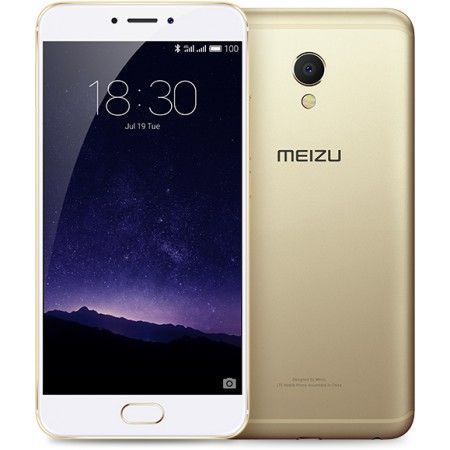
The Meizu MX6 kind of shows a sleek , modern vibe, very much in line with Meizu’s own design philosophy. It uses an aluminum unibody construction, so it feels more “ premium ” in the hand and it also holds up better. The metallic finish really does help the look, but it also gives a sturdier frame, meaning it tends to flex less than plastic options you might find elsewhere.
The MX6 keeps things minimalist, with clean lines and slightly rounded edges. In terms of size it comes in at 153.6 x 75.2 x 7.3 mm, and it weighs about 155 grams, so overall it ends up looking pretty slim and light for what you’re getting. On the front you mostly see that 5.5-inch display, and the bezels are kept to a minimum, which makes everything appear more current. At the bottom of the front panel there’s the physical home button, and yeah it also works as a fingerprint sensor. Next to it you get capacitive touch buttons, used for navigation, keeping the whole layout fairly straightforward.
You can also pick from several colors, including Silver, Gold, Gray, and Pink, so buyers have more than just one choice. The color options, along with the way the body is finished , really support that premium appearance, and it becomes a more appealing pick for its price band
Ergonomics and Handling
Even though the Meizu MX6 sits a little on the larger side, it’s still supposed to stay comfortable for, day to day use. The rounded edges and the thin silhouette make it easier to hold in hand , and the aluminum unibody gives that sturdy reassuring kind of touch. The physical home button placement with the capacitive touch keys are put together in a kind of natural layout, so moving around is quick without having to rely on extra on screen gestures , or additional buttons.
The device has this slim profile and light build, so it seems pretty easy to live with for longer stretches, though people with smaller hands might still feel it’s a bit awkward when you want to use it in one hand. The whole build looks sturdy, the aluminum body feels solid enough, and you get this sort of premium vibe, even if the pricing sits more in the mid-range bracket, if you know what I mean.
Display
Size and Quality
The Meizu MX6 comes with a 5.5-inch Full HD IPS LCD screen, running at 1920 x 1080 pixels. That setup lands you at around 403 pixels per inch, and yeah it looks sharp and crisp for day to day viewing. With IPS LCD tech you also get solid color reproduction and wide sight angles which helps a lot for movies, casual gaming, and everyday tasks.
Brightness is fine for most situations, but it can hesitate a bit under harsh direct sunlight, especially next to some higher-end models with more advanced panels. The Full HD resolution, balances sharpness with battery friendliness ,so the visuals feel enjoyable without constantly draining resources or anything like that.
Performance and Daily Use
The MX6’s screen performance is pretty ok overall, like responsive touch and colors that look vibrant, even in everyday light. With Full HD resolution, text and pictures stay crisp, while the IPS panel helps with honest color output and wide viewing angles, so it doesn’t get weird when you tilt it. Of course it’s not quite as flashy as some newer, more premium models that use Quad HD or OLED, but for normal use cases it feels solid and gives a comfortable viewing experience most of the time.
Performance
Hardware Specifications
Inside the Meizu MX6 it kinda just rolls along with a MediaTek MT6797 Helio X20 chip. That one uses a deca core arrangement, with two Cortex-A72 cores running at 2.3 GHz and eight Cortex-A53 cores at 1.85 GHz. Beyond that you get 4GB of RAM plus 32GB of internal storage, and if you end up needing extra room beyond the usual, there is a microSD slot for expansion up to 128GB. In practice, this pairing lands in a dependable mid range sweet spot.
The Helio X20 is basically about balance between raw speed and power thrift, and that whole deca core concept is there so multitasking feels smoother , plus everyday use stays quick. The 4GB RAM also helps the phone keep more than one app around at the same time. Meanwhile the 32GB of onboard storage is typically fine for apps, media, and normal documents and regular files.
Benchmark Performance
So, in those benchmark tests the Meizu MX6 does pretty decently for what you’d expect from this kind of phone. Like in Geekbench 3 it lands at roughly 1,500 for single core, and around 5,500 for multi-core. To me these numbers suggest the MX6 can deal with daily stuff plus normal multitasking without too much fuss.
For gaming it is not exactly a monster, but it works for casual games and also for a few titles that are a bit more demanding. Things like “Angry Birds” or “Candy Crush” feel smooth most of the time. But if you jump to heavier games, for example “Asphalt 8” or “PUBG Mobile”, you might notice some stutter, frame drops, and you may end up lowering graphics, just a little… or more, depending on the match.
Camera
Camera Specs
The Meizu MX6 has a 12MP rear camera which uses a Sony IMX386 sensor, and it’s positioned behind an f/2.0 aperture. That back camera also brings phase detection autofocus (PDAF) plus a dual tone LED flash, so pictures look more evenly lit. Up front there’s a 5MP camera f/2.0 too, it’s mostly for selfies and for those video chats where you want everything to appear nicely crisp.
What matters is how that rear sensor is tuned to grab images with solid detail and fairly natural color. The dual-tone LED flash is there to support low light shots, so pictures don’t get too dull. And the PDAF system helps the phone lock focus quickly, even when lighting changes.
Camera Performance
So, the rear camera on the Meizu MX6 is kinda… generally good, and in brighter environments it manages to grab sharp images with lots of little details. The Sony IMX386 sensor seems to deliver accurate color reproduction and a decent contrast level, which makes it a solid pick for everyday photography. Still, when the light drops, it can run into trouble, you may notice more noise and some of the fine detail just does not show up as well as you’d expect.
For the front camera, performance is pretty decent for selfies and video calls. The 5MP resolution gives you enough clarity for casual use, although it probably won’t feel as crisp as phones with higher resolutions. In mixed lighting it does okay, but the absence of a dedicated LED flash can seriously cap things in darker rooms.
Video recording
Video recording on the MX6 goes up to Full HD, and that translates into footage that looks clear and detailed enough for casual recording. The overall output is fine for sharing, like on social media, or for personal videos. But compared with more advanced devices , it may not feel like it matches their video capabilities.
Battery Life
Battery Specifications
The Meizu MX6 comes with a 3,060mAh non-removable battery. In terms of raw capacity, it’s pretty typical for the device size and its category, so you get a reasonable middle-ground between battery life and how thin the phone is. The MX6 also supports fast charging via Meizu’s mCharge tech, which helps shorten charging times when compared with standard chargers.
Battery Performance
In real-world use, the Meizu MX6 usually gets you through a full day, unless you go hard on everything all the time. With moderate usage , like web browsing, scrolling through social media, and a bit of media playback here and there, the battery feels pretty steady. But if you start doing heavier stuff such as extended gaming sessions or long video streaming, then yeah… you may end up needing a recharge by the end of the day.
The mCharge fast-charging tech is there to shorten the waiting time. So when the battery is getting low, you can do a quick top up and get back to what you were doing without too much downtime. It’s basically a practical convenience for people who want a rapid refill when time is tight.
Software Experience
User Interface
The Meizu MX6 comes with Android 6.0 Marshmallow, and on top of that you have Meizu’s Flyme OS 5.5 skin. Flyme OS is usually described as clean and rather straightforward , and it tries to keep things streamlined, without sort of dumping the phone with extra apps you never asked for. So you end up with a user interface that has a customizable home screen , an app drawer, and a bunch of small options that help you tune the look and feel to your liking.
Beyond that, Flyme OS throws in its own little extras and adjustments, like one handed mode, gesture controls, plus themes and icon packs. In general, the overall software experience is meant to feel smooth and quick, with a focus on simple usability, and yeah , it also looks pretty nice.
Software Updates
When the Meizu MX6 first came out it was running an Android version that felt pretty current. But some users can end up seeing slower delivery of the newest software updates compared with phones from the more visible brands. Flyme OS updates usually get released in waves, still you might have to lean on community forums, or even use custom ROMs, if you want to reach fresher Android builds earlier.
Connectivity and Extras
Connectivity Options
In terms of connectivity the Meizu MX6 covers the usual essentials, including 4G LTE for quick mobile data. For Wi‑Fi it supports 802.11 a/b/g/n so you get solid wireless access at home and outside. There is Bluetooth 4.1 for linking up different accessories, plus NFC for contactless payments and quick device pairing.
On the hardware side, the MX6 includes a USB Type‑C port for charging and data transfer, which is both modern and easy because it’s reversible. It also retains a 3.5mm headphone jack, so you can plug in wired audio gear directly without hunting for adapters or dongles.
Extras
There’s also a fingerprint sensor built into the physical home button. This gives you a practical biometric layer for unlocking the phone and keeping apps, and personal data more locked down. In everyday use the sensor tends to be responsive, and the results are generally accurate too, so biometric authentication feels dependable.
Overall User Experience
Performance and Daily Use
Honestly the Meizu MX6 gives a pretty positive overall user experience, you can feel it’s built with design, display, and performance in mind. That 5.5-inch screen, plus the slim and good looking body, works well for streaming, browsing , and just everyday things. The speed isn’t “flagship” material, but it’s still enough for daily tasks and a decent amount of multitasking, kinda like it stays steady when you don’t push it too hard.
As for the cameras, they are fairly solid for a mid-range phone. In bright light the rear camera puts out nice results, and the front camera is fine for selfies, not amazing but definitely serviceable. Battery-wise the Meizu MX6 is usually reliable, it’ll cover a full day with moderate activity, and the fast-charging option helps for those quick refresh moments when you need a little more power, right before you head out.
Software Experience
The Flyme OS layer sitting on Android 6.0 Marshmallow feels clean, streamlined, and visually pleasant. The extra touches, like gesture controls and themes, make the whole experience more lively than plain Android.
Everything feels pretty smooth and easy to get used to, but there is one thing you’ll probably notice—Meizu doesn’t push the newest Android updates as fast, so if you genuinely care about the latest features and timely security patches , this may feel like a small weak point.
Strengths
Design and Build Quality: The Meizu MX6 has an aluminum one piece body, which feels premium and it holds up well in day to day use. The look is sleek , modern, so it’s pretty easy to enjoy it visually, even if you don’t stare at it all the time.
Display: The 5.5-inch Full HD IPS LCD screen delivers solid color reproduction and decent clarity. it’s definitely great for movies, scrolling, and the typical everyday tasks.
Performance: With the MediaTek Helio X20 chipset plus 4GB of RAM, the phone manages multitasking and everyday tasks pretty well. casual gaming works, and most common apps run smoothly enough, like, for what most people actually do.
Battery Life: The 3,060mAh battery paired with mCharge fast-charging tech gives dependable endurance, and it’s convenient when you are out, traveling, or just forgetting to plug it in.
Software: Flyme OS feels clean and pretty intuitive, and it brings a handful of helpful custom touches. overall user experience is more pleasant because of that, even when you compare it to more basic interfaces.
Weaknesses
Performance Limitations: The Helio X20 chip is capable, but for heavier workloads and higher-end gaming, it can get a bit strained. so you may notice some stutter, or the performance drops when things get more intense, not all the time, but enough to be noticeable.
Low-Light Camera Performance: In bright conditions the rear camera can look good, however in low light it may introduce noise and lose some finer details. the front camera is ok, but it may not keep up with competitors that offer higher resolution.
Display Resolution: The Full HD panel is fine, yet it does fall behind some rival phones with higher resolution. if you’re chasing the sharpest possible image, this might feel like a small downgrade.
Software Updates: Getting the latest Android updates might take longer than you’d expect. this can affect access to new features, and also delays the security improvements, so it’s something to keep in mind.
Comparison with Competitors
To give a more rounded view, it helps to sort of compare the Meizu MX6 with a few competitors from the same time period. There are some obvious rivals like the Xiaomi Mi 5 , the Samsung Galaxy A7 (2016) and the LG G5. Each one has its own strong points, plus its little weak spots, so the comparison tends to make the MX6’s place in the market feel clearer, even if it’s not totally perfect.
Meizu MX6 vs. Xiaomi Mi 5
The Xiaomi Mi 5 showed up around early 2016, and honestly it’s like a near counterpart to the Meizu MX6 in that mid-range sweet spot, yknow. The Mi 5 packs a 5.15-inch Quad HD screen, with a 2560 x 1440 resolution , so it’s sharper than the MX6’s Full HD display. It leans on the Qualcomm Snapdragon 820 chipset and it comes with 3GB of RAM , so normal day to day scrolling and stuff feels pretty fluid, plus gaming is also kinda more convincing than you’d expect.
Camera wise, the Mi 5 has a 16MP rear sensor plus optical image stabilization , which usually helps with low-light shots a lot more than what the MX6 can do. The front camera is a 4MP sensor, and yeah the resolution is lower but selfies still look good overall. The Mi 5 battery is smaller at 3,000mAh, but it kind of makes up for it with fast charging support.
For design, the Mi 5 goes with glass and metal construction, giving that more premium, solid touch, somewhat like the MX6’s aluminum unibody frame. Still, the Mi 5 tends to feel more high-end in terms of display plus overall performance, even though it costs a bit more.
Meizu MX6 vs. Samsung Galaxy A7 (2016)
So the Samsung Galaxy A7 (2016) feels like a pretty solid fallback option next to the Meizu MX6. It comes with a 5.5-inch Super AMOLED screen, and yeah you get vivid tones, plus deeper blacks, basically a different vibe than the MX6’s IPS LCD. Inside, the Galaxy A7 uses the Exynos 7870 with 3GB RAM, it performs in a similar lane to the Helio X20, which is… kinda the point here.
On the photo side the Galaxy A7 has a 13MP rear camera and a 5MP selfie shooter. They’re pretty close to what you see on the MX6: 12MP on the back, 5MP upfront. Battery wise, the A7 lands at 3,300mAh, so battery life is a bit steadier compared to the MX6, at least on paper. And for the look, it’s metal plus glass, which makes it feel more premium than the MX6 everyday style.
Meizu MX6 vs. LG G5
Now the LG G5, which launched around early 2016, plays a bit more “serious rival” role. It offers a 5.3-inch Quad HD display with higher resolution than the MX6. Under the hood, there’s a Qualcomm Snapdragon 820 plus 4GB RAM, so performance is clearly stronger than what the MX6’s Helio X20 can manage.
Camera setup on the G5 is also more flexible. You get a 16MP main sensor with OIS, along with an 8MP extra wide-angle camera. That combination tends to bring more creative room than the MX6’s configuration. Also, the LG G5 includes a removable battery, which feels uncommon nowadays and it comes with a 2,800mAh capacity.
Design wise, the G5 goes with a modular approach, users can swap parts around, which is quite different from the MX6’s more standard build. In general, the G5’s construction quality, along with those extra ideas, gives a more upmarket user experience, not just a “specs only” thing.
Conclusion
The Meizu MX6 is sort of a solid mid-range smartphone that mixes style, performance, and day to day functionality , in a pretty convincing way. It comes with this sleek aluminum unibody structure , a big 5.5-inch Full HD display, and a capable MediaTek Helio X20 chipset, so in its price tier it feels pretty competitive overall. As for cameras, the 12MP rear sensor and the 5MP front camera deliver decent results, while the 3,060mAh battery seems to hold up well, and it also supports fast charging which is pretty handy.
That said, the MX6 will not always keep pace with more premium devices, especially when you look at raw speed or display sharpness. Still, it makes sense for people who want something stylish and practical , at an affordable cost. The Flyme OS interface adds extra value with its customization choices and an intuitive layout. However, some users might notice small annoyances, like delays when it comes to getting newer software updates.
So overall, the Meizu MX6 really stands out thanks to its premium looking build, dependable performance, and pricing that doesn’t feel out of reach. It strikes a good compromise between features and value , and it’s worth considering if you’re shopping around for a mid-range phone. Even with a few limitations, its strong points make it an appealing pick for anyone who wants a stylish , functional device without spending too much.
Meizu MX6 Unlocked Smart Phone, 4GB+32GB, International Version, (Champaign Gold): Buy it now
Meizu MX6 Unlocked Smart Phone RAM 4GB+ROM 32GB 5.5″ Screen 4G FDD-LTE Champaign Gold: Buy it now
Original Meizu MX6 3GB 32GB Mobile Phone Android Global Firmware cellular Deca Core 1920x1080P 5.5″ 12MP Fingerprint ID Pink: Buy it now
Related Posts


Tech Reviewer & Product Analyst
Định Bia has spent over 10 years testing consumer electronics with a focus on smart technology. He work as a product advisor at Biareview where he helped customers find the right devices for their needs. He personally tests every product featured on this site using a consistent evaluation framework covering quality, durability, and value. All reviews are based on experience, not influenced by the manufacturer.