Advantage:
Compact design, good finishing
The back of the fingerprint does not stick
Button good elastic
2 camera 2 LED flash, 2 sim
Speaker clarity
Long battery life
8GB memory card included
Disadvantages:
Screen brightness is not high, difficult to see when outdoors
Must be disassembled to replace the sim
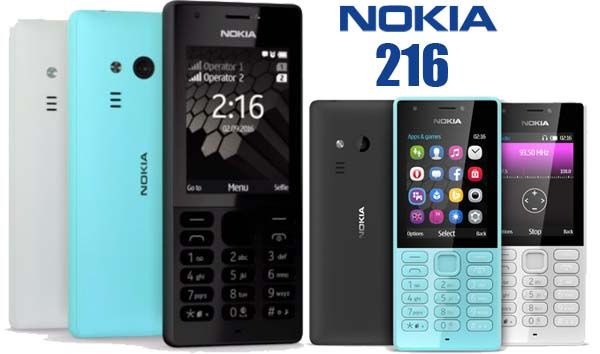
As usual, the product is still housed in a square box, which carries the tradition of popular phones as well as smartphones from Microsoft. The front of the box is illustrated for the product, with three youthful colors: white, blue and black.
Open the box we will have a Nokia 216 packaged in neat bags neatly placed. Microsoft is also very careful when explaining how to remove the battery and sim with illustrations image.
As usual, accessories included with the unit will include a micro USB standard cord charger, a BL-5C battery, a headset (commonly found on popular Microsoft machines) Quick Use Guide.
Nokia 216 Dual Sim Phone – Blue – RM-1187 – International Version, No Warranty, GSM 900/1800: Buy it now
Design and Build Quality
Aesthetic and Materials
The Nokia 216 feels made for, practicality and endurance I mean, really straightforward. It keeps that classic candy bar style while staying compact enough for pockets without fuss. The body is a polycarbonate shell, sturdy but also light, so you don’t get that heavy brick feeling. Up front you get a 2.4-inch display , and right underneath are the usual physical controls for navigation. The keypad itself is tactile, and the spacing is decent , so dialing and writing messages is honestly more comfortable than you’d expect from a basic feature phone.
You can also pick it up in colors like black, white and cyan, so it doesn’t look completely flat in the hand. The color choices are simple, but they do help with appearance, without going into anything flashy. In general the design is minimal and functional. It kind of mirrors Nokia’s old habit of focusing on reliable gadgets rather than extra, unnecessary decoration.
Ergonomics and Handling
In terms of size, the Nokia 216 measures around 118 x 50.2 x 13.5 mm, and weighs about 82 grams. That combination means it stays compact and easy to carry. It also sits in the palm pretty well, with an ergonomic shape that makes one-hand use less annoying. The edges are rounded , and the finish feels smooth enough that you can handle it for a while without it digging into your fingers.
The physical keys are spaced out in a sensible way, and they give solid tactile feedback when pressed. Typing is set up for quick use, each key has its own distinct feel so you don’t constantly second guess what you hit. The navigation parts, like the directional pad plus the function buttons, are positioned so you reach them naturally. Overall, the Nokia 216 is comfortable to manage and pretty user friendly, especially if you prefer physical controls over a touchscreen experience, which is kind of the point.
Display
Size and Quality
The Nokia 216 comes with a 2.4-inch QVGA display, meaning it sits at 240 x 320 pixels. Sure, by today’s standards it’s pretty modest, yet the size and this specific resolution work well for a feature phone. With QVGA, the pixel density lands near 167 pixels per inch, and that’s enough to make out text, images, and simple visuals without much fuss on a small screen.
Of course the display isn’t meant for high-definition media time, but it handles its job pretty neatly. When you look at the text, it feels clear and readable, and the colors are decent, even if they’re not as lively as what you’d see on a smartphone. Brightness is also fair, so in different lighting you can still use it, but under direct sunlight it can get a bit harder to see, you know, the usual limitation.
Performance and Daily Use
In everyday use, the 2.4-inch screen on the Nokia 216 does, well what it should. The display feels sized just right for a feature phone, giving you enough space for SMS messages, dialing screens, and moving through the menus. It all feels pretty straightforward and comfortable, like you’re not fighting the layout. The overall simplicity matches the phone’s aim, which is mostly basic, no drama functionality.
There’s no touch support, so interaction is done via physical keys, which can feel more natural for people used to classic phones. For reading messages, checking contacts, and running the basics, the screen stays acceptable.
Performance
Hardware Specifications
The Nokia 216 runs on a kind of simple hardware arrangement meant to cover the basic stuff you expect from a feature phone. Inside it has a Mediatek MT6260A processor along with 16MB of RAM, nothing too fancy but that’s kind of the point. The device also includes 16MB of internal storage, and if you need a bit more space, you can use a microSD card, up to 32GB. Honestly this setup feels more than enough for what the phone is supposed to do, mainly calling , messaging , and using a few basic apps.
That Mediatek MT6260A processor is a low-power chipset built for feature phones, so it stays efficient. It helps keep the main functions running smoothly , like navigation, calls, and messaging. Meanwhile the 16MB of RAM gives it enough room for limited multitasking, not a lot, but it’s practical. The 16MB of built-in storage is then where contacts, messages, and a small set of core applications end up.
Benchmark Performance
Benchmarking a phone like the Nokia 216 is not really a thing that people do a lot, like, in general, because performance numbers usually count for less on devices with basic features. Still, the Nokia 216 hardware is set up to handle its everyday chores, without any real trouble,no drama,or big surprises. It kind of just goes on, quietly, doing what it needs to do. In real use, most people will notice it works well for its intended role, with fairly responsive navigation and steady behavior for essential features.
Overall the Nokia 216 performance is kind of fine for a feature phone, and there isn’t really much in the way of noticeable delay or those slow moments during normal use. The phone handles calling, texting,and basic applications, no real headaches, so it feels pretty dependable for people who don’t want advanced options, or maybe they don’t want heavier workloads, ever.
Camera
Camera Specs
The Nokia 216 comes with a 0.3MP back camera, plus an LED flash, and for front facing stuff there is a VGA camera for selfies. On the rear, you get a fixed-focus lens, nothing fancy, but it does help keep things steady. The LED flash also kicks in for dimmer scenes, even if it’s pretty limited. For the front, the VGA camera keeps it simple too, good enough for video calls and those quick selfie moments.
How Well It Performs
Overall, camera performance on the Nokia 216 is pretty basic, which kind of matches its feature phone vibe. That 0.3MP rear camera can snap pictures, but the image quality stays modest. The resolution is low, so the photos might look a bit short on detail and sharpness. Still, it works as a practical little tool for fast snapshots, and you can share them through MMS or social media pretty easily.
In darker places, the LED flash can brighten up the subject, so you can actually see what you’re filming, or photographing. But even with the flash, the results don’t jump much in quality. It helps with visibility, not with turning low light into high-quality shots.
For the selfies and video chats, the VGA front camera is also basic. The low resolution is enough for casual use, and for occasional video conversations when you just want something that works. There aren’t any extra, advanced camera tricks here, but it does fit people who want a straightforward and dependable selfie option, without getting into more complicated features.
Battery Life
Battery Specifications
The Nokia 216 comes with a removable 1,020mAh battery. That capacity is pretty normal for feature phones and it’s meant to stretch your day(s) without needing a recharge every moment. Since it’s removable, you can swap it out if you ever need to, so the whole phone feels more practical, really.
Battery Performance
Honestly, the battery life on the Nokia 216 feels quite solid for a feature phone. The 1,020mAh battery can deliver a few days of use on one charge, though it still depends on how you personally use it. People should get strong talk time and also a decent standby duration, so the Nokia 216 works well for anyone who wants a dependable handset, with minimal charging interruptions.
In everyday routines, like placing calls, sending messages, and doing a bit of casual use of the basic apps, it keeps going for longer than you’d expect. If you go heavy, for example long conversations or extended time with multimedia features, then the battery will drain quicker. Still, the device keeps enough endurance for most regular schedules.
Software Experience
Operating System and User Interface
The Nokia 216 runs on the Series 30+ operating system, and it’s built kinda for feature phones. The user interface feels simple, like you just want it to work, no big surprises, no busy menus. It leans into ease of use, plus accessibility, and in general it keeps things plain. The OS offers the essentials, calling, texting and a few basic apps, so there’s no real “modern smartphone” type of complexity.
On the Series 30+ side you get several pre installed applications, like a web browser, a media player, and some basic games too. The layout is pretty classic, kind of menu based and it’s easy to move around using the physical buttons. Because of that, people can reach the phone’s core functions pretty fast, which makes it a decent option for folks who want a no-frills kind of experience, not more and more features.
Software Updates
Because it’s a feature phone, the Nokia 216 doesn’t receive regular software updates the way newer phones do. The Series 30+ OS stays mostly the same, with only limited updates or little enhancements. So you can usually count on a steady and consistent software behavior, though the downside is that you won’t see new features, nor improvements later on.
That same simplicity works as a strength, and also as a limitation. It helps with reliability and day to day ease, but it also means users won’t get the newest advancements, or security patches, that more advanced operating systems tend to add over time.
Connectivity and Extras
Connectivity Options
The Nokia 216 kind of delivers basic connectivity, the kind you’d expect from a feature phone, not more. It handles 2G GSM networks so, yes users can place calls and also send text messages. There is Bluetooth 3.0 on board for hooking up to wireless accessories , plus a microUSB 2.0 port that works for charging and also for data moving, when needed.
Now, as for anything more modern, the Nokia 216 doesn’t really go there. It doesn’t support 3G or 4G, which feels pretty typical for this type of phone. This lack of newer connectivity options fits the whole idea of the device, simplicity first, basic work done. Nothing extra trying to be clever.
Extras
On the practical side, the Nokia 216 brings a few handy extras. There is a built in FM radio so you can tune in to radio stations without needing anything else. The phone also includes a flashlight, which you can access through a dedicated side key , pretty straightforward.
Honestly, the Nokia 216’s feature set seems aimed at people who want something dependable, and basically functional , not flashy . It probably doesn’t have the advanced stuff you see on smartphones, but it still gives useful tools , plus those everyday capabilities you end up actually using.
Overall User Experience
Performance and Daily Use
The Nokia 216 gives a sort of steady, no drama user experience. It feels easy to live with, and the overall performance fits basic routines like making calls, sending messages, and using plain applications. The responsiveness is pretty solid , and the interface stays simple enough that most people can navigate it quickly. For anyone who wants simplicity and practical use rather than fancy extras , this phone comes across as a dependable little option.
It’s also helped by the compact form factor, a rugged style of build, and a long lasting charge. Those things together make the daily feel smoother , even if you do not expect “modern smartphone” behavior. The Nokia 216 tends to shine as a trustworthy communication tool, especially for users who do not need all the complexity that comes with today’s devices. With its straightforward menus and physical buttons it delivers something familiar ,and honestly kind of comfortable.
Battery Life
One of the strongest points on the Nokia 216 is its battery life. The 1,020mAh battery is designed for long stretches , so users can often go a few days between charges. That benefit matters most if someone relies on the handset for essential contact ,and wants to avoid frequent recharging. In other words the Nokia 216 can work as a reliable spare phone or as a main device for people who prefer fewer interruptions between power ups.
Another helpful detail is the removable battery design. It adds convenience because the battery can be swap out if it starts to weaken as time goes on, kind of. This comes in handy if you want to stretch the phone’s lifespan, or when you need a quick swap of battery while you’re away from a power outlet for a longer period.
Software and Usability
The Nokia 216’s Series 30+ operating system kinda feels built for basic living, it’s meant to be simple, and not really for all the extra fuss. The user interface is intuitive enough, and it’s not hard to move around in, even if someone is older or new to phones. The whole device keeps things focused on core tasks, so you don’t get dragged into the modern smartphone distractions, you know like endless feature layers.
Getting through the menus and finding basic applications works pretty smoothly. That’s mostly because the interface is well organized and the physical keypad is there to help you, not just rely on screens. Those physical buttons also give tactile feedback, and honestly that’s a nice thing for people who like reliable real controls more than touchscreens.
Now, the operating system is not offering advanced apps or fancy extras. But it does have important tools, like a calendar, an alarm clock, and a calculator, and it is pretty decent like that. If someone wants more, they can open Opera Mini for simple web browsing and they can also download a few apps through the Nokia Store though the catalog looks smaller than what you usually see on the smartphone stores.
Connectivity and Extras
On connectivity, the Nokia 216 stays true to its feature phone identity. It supports 2G GSM networks, so calling and texting work in a dependable way. The absence of 3G or 4G support might slow down internet use, and that can limit data speeds too, but it really matches what this phone is trying to do, which is essential communication first.
Bluetooth 3.0 is included too, so users can link up wireless extras, like headsets or speakers, and that helps the overall day to day experience. Then there’s the microUSB 2.0 port, which makes charging and data transfer straightforward, even if those transfer speeds aren’t exactly fast, compared with newer standards these days.
The FM radio function is a pretty notable add-on, it lets people listen to broadcasts without needing the internet, which, honestly, can be a big deal. For some users it’s even like a back up option for when data is limited, or when they just want the classic radio routine. And yes, local news and entertainment can still show up in a pretty straightforward way.
Then there is that built in flashlight part , it’s kinda practical like genuinely practical. In low light situations it really comes in handy, and it makes the device feel more versatile in everyday life, because you know how it goes— you always end up needing a small light somewhere.
Pros and Cons
Pros
Exceptional Battery Life: The 1,020mAh battery usually lasts multiple days from one charge so the Nokia 216 is a solid pick for anyone who genuinely cares about long runtime.
Durable Build Quality: With a polycarbonate body and a compact form factor , the Nokia 216 feels sturdy, and it should manage the usual daily wear and tear pretty well.
User-Friendly Interface: The Series 30+ system together with the physical keypad keeps things simple. It’s an intuitive experience too, especially for people who don’t want complicated menus.
Removable Battery: Because the battery is removable , users can swap it later, which improves practicality and supports a longer overall lifespan.
FM Radio and Flashlight: Having both the FM radio plus flashlight means extra everyday features, and that makes the phone more than just calling and texting.
Cons
Limited connectivity: The Nokia 216 only does 2G, so no 3G or 4G which kinda means the data pace is slow, and internet stuff feels kind of bare.
Basic camera performance: The 0.3MP rear camera plus the VGA front camera—really, it’s more like “just enough” for quick looks rather than real photos.
Outdated operating system: it runs Series 30+ and it does not get regular updates, so you end up missing out on new features and the safer security improvements.
Limited storage: with just 16MB inside, saving anything or trying apps is pretty tight, even with microSD expandability, there’s still a ceiling.
No touchscreen: not having a touch interface can feel awkward if you’re used to modern smartphones where you swipe and tap everything.
Conclusion
The Nokia 216 is basically a feature phone, that does what it’s supposed to do, a reliable and uncomplicated communication tool. It has a compact design, a durable build quality and an exceptional battery life so it feels like a smart pick for people who want simplicity, and practicality, not too much drama. The Series 30+ operating system keeps everything easy, with a user friendly interface plus a physical keypad, which fits those who still prefer traditional mobile phone functions.
Even so, the Nokia 216 does have some limits, like basic connectivity options, modest camera output and an operating system that is a bit dated. Still it stands as a solid choice if you care more about essential function than advanced extras. Also the long battery duration, along with the removable battery setup, makes it easier to keep going, so you won’t need to recharge as often as before.
All in all, the Nokia 216 works well for users who want a dependable feature phone, centered on core conversation needs. Its simplicity, durability, and practical features make it a dependable option for anyone who values a straightforward and functional phone experience.
Related Posts

Tech Reviewer & Product Analyst
Định Bia has spent over 10 years testing consumer electronics with a focus on smart technology. He work as a product advisor at Biareview where he helped customers find the right devices for their needs. He personally tests every product featured on this site using a consistent evaluation framework covering quality, durability, and value. All reviews are based on experience, not influenced by the manufacturer.