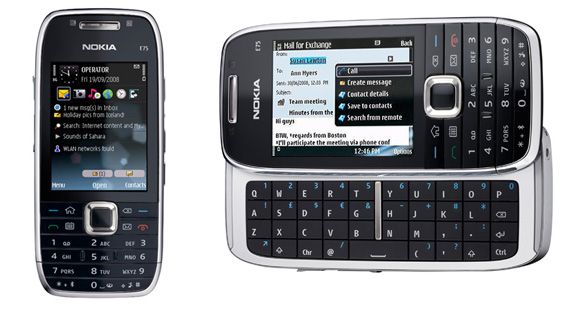
The Nokia E75, released in early 2009 , was a pretty standout part of Nokia’s E-series lineup, meant to catch business users with that mix of work focused tools and a sturdy, dependable build. Back in its time as a “smartphone of the era,” the E75 tried to combine day to day usefulness with style , and it leaned hard on a full QWERTY keyboard, lots of connections and the Symbian S60 operating system. In this kind of review we dig into the whole thing, from how it looks and feels , to what it does in practice, how the software behaves, and what kind of impact it had overall.
Design and Build
The Nokia E75 kept a classic candy bar shape, but with a slide out QWERTY keyboard , and honestly that was the big deal for people who preferred actual buttons for writing. It came in a few colors , like a sleek black , a more refined silver, and a bold red, and each one brought a slightly different vibe.
As for the Nokia E75 specs, the dimensions are 111 x 50 x 14.4 mm, and the weight lands around 139 grams. The construction felt firm, almost like it was made to handle real use without much fuss. The keyboard slide mechanism moved smoothly, and it was well engineered , giving you that small but satisfying tactile response. Once you open the keyboard, the device felt pretty well balanced, so it was easier on your hands during longer typing sessions.
The front of the E75 had this 2.4- inch QVGA display , with a resolution listed as 320 x 240 pixels. Like, sure it was enough for basic tasks and just looking at content, but by 2009 it felt a bit older , especially once some devices started moving toward higher resolutions. The screen looked crisp and bright in normal day lighting, still it would kind of struggle if you were in direct sun. That was mostly because the brightness was limited and there was no ambient light sensor, which … yeah, you really notice it.
A big standout part of the E75’s overall design was the keyboard, not just the idea of it but actually using it. The full QWERTY keyboard was spaced out in a way that made typing feel steady and comfortable. Each key was slightly raised and easy to tell apart, so typing accuracy and even speed were better than you might expect. The layout also felt tuned for fast access to things you use all the time, like there were dedicated keys for email and messaging, so you didn’t have to hunt around.
Turning to the back, the Nokia E75 included a 3.2-megapixel camera with an LED flash . In its era it could still produce decent photos , and the camera module sits flush against the back cover. The whole rear design looks clean and kind of understated, rather than flashy or overly styled. On top of that there was a microSD card slot , letting users expand storage up to 16GB. That gave plenty of room for files , music, and applications.
In general the design of the Nokia E75 was practical and pretty well executed. It worked especially well for business users who really liked the tactile response from a physical keyboard. It didn’t exactly chase that sleek modern look some competitors were going for , but the build quality and overall functionality were solid and genuinely commendable.
The Nokia E75 kind of came with a 2.4-inch TFT display, and it ran at a resolution of 320 x 240 pixels. Back then it was fine, for its moment i mean, you could read text and see basic graphics without too much fuss. Still, if we look at 2009 standards, the whole setup started to feel a bit cramped for screen real estate, especially once other makers were pushing devices that had far more pixels and sharper-looking imagery.
As for color reproduction, it was decent, colors looked vibrant enough and they seemed pretty true in normal lighting. but brightness was , not super strong, so under bright sunlight, or when there was direct light , it became annoying to check anything clearly. And since the phone didn’t include an ambient light sensor, users had to fiddle with the display brightness themselves, depending on where they were. That part was a small hassle, but it adds up.
Also the E75 used a resistive touchscreen, which was pretty typical for that era, though it has its issues. A resistive panel needs pressure to register input, so the responsiveness could feel slower and less natural compared to capacitive touchscreens which were becoming more common around then. The E75 touch interface worked for basic things, like moving through menus and using apps, yet it didn’t have the smoothness or precision you’d notice on the more modern touchscreen options.
Despite these limitations, the Nokia E75 display was pretty adequate overall, for the everyday kinda stuff like reading emails , browsing the web , and viewing photos. Still, people who were used to newer smartphones, with those higher-resolution screens and capacitive touch , might have felt the E75 screen was a bit underwhelming, sort of less sharp than expected.
Performance and Hardware
Inside , the Nokia E75 ran on a 369 MHz ARM 11 processor, and it was paired with 128 MB of RAM. That combo was ok for the tasks and apps of the period, but looking back from 2009 standards, it wasn’t exactly a powerhouse next to several competitors, it just felt a little behind.
For storage , the E75 shipped with 75 MB of internal memory, and yes you could expand it with a microSD card up to 16 GB. The microSD card slot mattered, because it made it easier to boost the available space for music, snapshots , and other files, without much fuss.
Camera-wise , the E75 had a 3.2-megapixel unit with an LED flash, good for photos up to 2048 x 1536 pixels. The pictures turned out decent enough for that time, although it missed a bunch of newer smartphone features , like high-definition video capture or more advanced image processing tricks. The LED flash helped in dim light, but it wasn’t very strong, and it often left you with images that had visible noise, especially in darker scenes.
The E75s multimedia powers were sorta backed up by its music player, and video playback features too. the music player took on a bunch of audio formats like MP3, AAC and WMA, and it came with the usual basics such as playlist building, plus equalizer settings. For videos, it handled things like MP4 and 3GP so you could watch clips while moving around, even if the screen stayed rather small, and the resolution wasn’t anything fancy, so the viewing experience felt kinda restricted overall.
Battery life on the Nokia E75 was pretty decent, mainly because of the 1500 mAh battery inside. Nokia mentioned up to 6 hours of talk time, and as much as 20 days of standby time. that was pretty much in line with smartphones around then. In day to day use, the battery did what you’d want, it was steady, and the phone could typically push through a full day of normal use, including calls, messaging, and the odd bit of web browsing.
When it came to performance, everyday tasks ran smoothly most of the time, but yeah, you could sometimes notice lag when apps got heavier, or when multitasking got a bit much. With the limited RAM and processor muscle, the E75 wasn’t exactly the best choice for demanding, heavy workloads, though for regular, everyday scenarios it still worked well enough.
Software and User Interface
The Nokia E75 was running on the Symbian S60 3rd Edition, Feature Pack 2 operating system. Symbian was sort of a well known operating system for smartphones in the late 2000s, mainly praised for its steadiness and a wide, pretty deep feature package. Still, when the E75 came out , Symbian was starting to look older, especially next to newer systems that were coming in hard, like iOS and Android.
On the whole, the E75 user interface was usable but a bit dated. The main menu used an icon grid layout, and it could be tuned so it showed often used apps and small shortcuts. There was some personalization too, like switching themes and shuffling the icons around. But the overall feel , it did not have that same slick responsiveness, that more modern screens and operating systems seem to bring.
A standout part for many people was the email and messaging side. The phone supported multiple email types, including Microsoft Exchange, POP3, and IMAP. That made it a dependable pick for business use, where staying connected matters. The email app could manage more than one account at a time, and it included things like conversation threading, searching through messages, and attachment support too.
The messaging interface on the E75 was also fairly well designed, like it had dedicated keys on the QWERTY keyboard for quick access to messaging functions. It supported SMS, MMS and instant messaging, and honestly the keyboard made typing messages faster, more precise too. The messaging app had predictive text input, plus threaded conversations, so the whole conversation flow felt smoother, less clunky in real use.
Then there was the E75’s calendar and productivity side, which was built to help you stay organized and keep your schedule in check. The calendar app offered several views daily, weekly, monthly and so on, and you could create handle appointments events and tasks without too much fuss. Also the device came with several productivity tools , like a to-do list a voice recorder and a calculator. Those little utilities were pretty handy for both personal stuff and more professional routines.
One place where the E75 software kind of showed its age was the web browsing, if that makes sense. It did include a built in web browser, but it wasn’t especially advanced compared to newer browsers on other platforms. The browsing itself worked, yet it could feel slow or annoying, especially with heavier pages or sites packed with media. And because it didn’t really support the newer web standards and technologies, the overall browsing experience ended up being pretty limited.
The E75 also came with Nokia’s Ovi Store, which was kind of the company’s app store for grabbing extra applications and games. Even if the Ovi Store had a bunch of options, it felt less broad or more convenient than the app stores you got on iOS and Android. For the E75, the collection of apps and games was a bit thin , so the software world didn’t feel as alive or changeable as what competitors were doing.
Connectivity
On the connectivity side, the Nokia E75 kinda had a few ways to stay in touch and keep moving through work tasks, without too much trouble. The phone supported quad-band GSM (850/900/1800/1900 MHz) , plus tri-band UMTS (900/1900/2100 MHz) . In practice that meant it could pair up with lots of cellular networks across different countries, so you are not stuck in just one region or carrier. With 3G support in play, data transfer became quicker and browsing felt snappier than on older 2G networks.
Beyond the mobile network stuff, the E75 also included Wi-Fi (802.11b/g) for hopping onto local wireless networks. That was useful when cell service was shaky, or when you wanted to cut down on data usage by leaning on Wi-Fi instead. Having Wi-Fi onboard was a pretty solid bonus , since it helped users browse the web and use online services with better speed and usually lower cost.
There was also Bluetooth 2.0, which let users pair up with Bluetooth-enabled gadgets , like headsets, keyboards, and other add-on gear. Bluetooth was generally dependable for sending files and running wireless accessories. Still, it wasn’t as advanced as later Bluetooth versions that promised faster transfers, and also better range.
For wired connectivity , the Nokia E75 had a micro-USB port, so you could transfer data and also charge it. Having that micro-USB port was actually a nice plus, because it made for a more standard sort of link for syncing files and plugging into a computer. On top of that , the device included a 3.5mm headphone jack, which is convenient for listening to music and also handling calls with wired earbuds or headphones.
Overall, the connectivity on the Nokia E75 felt pretty solid and, kinda complete in that era, and it lined up with what most people expected. You got wireless as well as wired options, so you could keep yourself linked , and transfer data along the way with out too much bother.
Camera performance
The Nokia E75 included a 3.2-megapixel camera that could take still pictures up to 2048 x 1536 pixels. It was not exactly the highest resolution choice compared with some newer devices, but honestly it worked fine for daily use, and it handled decent quality shots without acting dramatic.
The camera also included an LED flash, which could help a bit when lighting got worse. Still, the flash wasn’t that strong, and in darker situations photos often showed noticeable noise, plus less crisp detail. It also missed some more advanced tools , like optical image stabilization or more premium image processing, and that held the camera back when conditions were less cooperative, like indoor scenes or dim streets.
The E75 camera interface was kind of straightforward, with choices to tune things like resolution , white balance , and color effects. It also had basic shooting modes portrait landscape, and night mode. So yeah, the camera UI did work, but it never felt as slick as the newer smartphone cameras, or as easy-to-use, kind of not there.
Besides taking photos, the E75 could record video too. That video option went up to VGA , meaning 640 x 480 pixels, at about 15 frames per second. It was fine for simple clips , nothing fancy, but it really wasn’t meant for high-definition video, which was getting more common on other devices. The video look was acceptable for its era, yet it missed that crispness and smoother motion that you’d expect from higher resolution recordings.
All in all , the Nokia E75 camera was decent for everyday photos and videos, but it wasn’t especially impressive when you compare it to newer smartphone camera setups. Performance was functional , but it was restricted by what the technology could do back then.
Software and User Experience
The Nokia E75 ran on Symbian S60 3rd Edition, Feature Pack 2, so yeah. Symbian was a pretty common smartphone operating system back in the late 2000s and people would often talk about its reliability, plus this huge pile of features. Still, when the E75 came out, Symbian kind of started to look old hat next to newer systems like iOS and Android, like it was getting a bit dated honestly.
The user interface on the Symbian S60 3rd Edition was working alright , though it felt kind of rough ,and not as glossy or fluid as what some newer operating systems do. The main menu showed up as a grid of icons , and you could tweak it so it would surface the things you use most, with shortcuts too. So yes there was some personalization, but it still didn’t match that kind of smoothness and quick reaction people get from touch-based interfaces, which honestly was the whole point.
One of the bigger strong points of Symbian OS on the E75 was its wide coverage of productivity applications. The handset came with a fairly complete set of business centered tools, like email , calendar, and contact management stuff. On the email side, it could handle more than one account, and it had features such as email threading, search options, and it could deal with attachments ,no drama. The calendar part also offered several different views, and it let you make and keep track of appointments, events, and tasks, all in a more organized way.
The E75 also carried a set of practical tools such as a to-do list, a voice recorder, and a calculator. These little apps helped with both everyday errands and work related needs, and they really fit the device’s business leaning direction. Not fancy like modern apps ,but still effective and usable, if you were into that style.
However, the Symbian OS also had its limits, or sort of, you know. The interface felt less intuitive than on newer platforms and it wasn’t exactly user friendly, navigating through menus and settings could be a bit cumbersome , like more effort than it should have been. And then there was the whole thing with modern web standards and technologies, it was mostly not supported, so the web browsing experience on the E75 was noticeably less advanced than what you got on newer devices. Plus, the Ovi Store, Nokia’s app store, had a more limited selection of applications compared to the app stores on iOS and Android.
Even with all that, the Nokia E75’s software still gave a solid user experience for its era, especially for business users who really valued the productivity features, as well as the physical keyboard. Still, the software was starting to look dated, and it had trouble keeping pace with the progress happening on competing platforms.
Impact and Legacy
The Nokia E75 was a pretty notable device in Nokia’s E-series lineup, and it basically reflected Nokia’s attempt to serve business users with a mix of productivity features and a physical keyboard. The phone was generally well-regarded for its build quality and functionality , but it also showed the kind of challenges Nokia ran into as the smartphone market kept changing.
Released in early 2009, the E75 was kind of positioned as a high end business smartphone, with its full QWERTY keyboard and productivity tools aimed at people who really needed a device that could juggle both private and professional tasks . The look and build quality of the phone were among its stronger aspects, and honestly the keyboard got good reactions from users who liked that tactile response you get from real keys.
Still, the E75 had a tough time staying in step with how fast the smartphone market was moving. Symbian OS, even though it was reliable and packed with features , was starting to seem old fashioned when you compare it to newer platforms like iOS and Android. On top of that, the resistive touchscreen wasn’t helping much, the screen resolution stayed limited, and the overall software feel didn’t match what competing phones were delivering.
By the time it arrived, the E75s overall impact was also capped a bit, since the market was gradually leaning hard toward touch-first interfaces and app ecosystems. Sure, it was a dependable unit for its era, but it just couldn’t keep pace with the rising fame of iOS and Android devices, those systems that delivered fresher day to day experiences and much bigger app libraries.
In retrospect, the Nokia E75 can be seen as a kind of device that sort of showed both its strong points and its challenges, of its era. It was well-built and pretty functional phone, with a clear focus on productivity, but it also made obvious the tricky stuff Nokia had to deal with as the smartphone market kept changing.
The E75 still feels like a noteworthy part of Nokia’s legacy, especially for people who really liked the physical keyboard and those business-minded features. It might not have been some big game changer for the wider smartphone market, yet it stayed a solid and practical device that did what it was meant to do for a lot of users. As smartphone history goes, the Nokia E75 feels like a transitional piece in the evolution of mobile technology, kind of bridging that gap between the older and newer eras, of smartphones.
NOKIA E75 RED 50MB QWERTY UK FACTORY UNLOCKED 3G 2G GSM CELL PHONE: Buy it now
NOKIA E75-1 50MB QWERTY Factory Unlocked 3G – International Version with No Warranty (Silver): Buy it now
Related Posts



Tech Reviewer & Product Analyst
Định Bia has spent over 10 years testing consumer electronics with a focus on smart technology. He work as a product advisor at Biareview where he helped customers find the right devices for their needs. He personally tests every product featured on this site using a consistent evaluation framework covering quality, durability, and value. All reviews are based on experience, not influenced by the manufacturer.