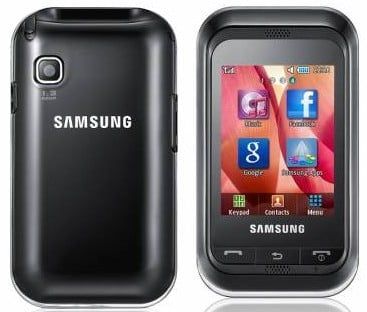
At a size of 96.3 x 53.8 x 13 mm, weighing just 80 grams. Compared with another touchscreen model is the Sony Ericsson Xperia X10 Mini, which is slightly longer and wider, but slimmer and lighter than Android devices.
The whole body is made of plastic, polished. The front of the screen is 2.4 inches, approximately the Nokia E63 screen, but the vertical display, 320 x 240 pixels resolution, 16 million colors. Samsung uses simple TFT technology and resistive touch, using the stylus to control.
Display and Touchscreen
The 2.6-inch touchscreen on the Samsung Champ was kind of a signature thing, it made it stand out from a lot of other feature phones at the time. This screen supported a 240 x 320 pixel resolution , so you got a pretty decent level of sharpness for basic daily stuff. It could show as many as 65,000 colors, and that was usually enough for images, small videos, and general graphical elements, you know, the normal menu visuals and such.
Even if the size and resolution were on the modest side, the touch panel felt responsive, and it let you move through menus and applications without that jerky lag feeling. The interface backed up simple touch actions like tapping and scrolling, which made the whole experience feel more natural , more intuitive, almost easier than you’d expect.
That said, the display didn’t really shine in direct sunlight. In bright conditions it could look a bit washed out, not great for outdoor use. Also the screen didn’t have the more advanced traits people were starting to see in phones around then, like high-definition sharpness or any kind of scratch protection, so it was less forgiving day to day.
Beneath this low-end mobile screen are three keys, two call buttons and a central Back key. The call off button is always the power button. These buttons are designed flat, but slightly higher than the screen, relatively easy to use.
The right side has only a call button, while the right side is a volume up and down key, the microUSB connector on the top of the 3.5mm headphone jack. The 1.3 Megapixel camera is slightly lowered around a light metal border behind.
Obviously, the compact Champ, the machine should not be “crammed” as many cheap sensors from China.
On the interface, Champ has up to four Home screens, allowing dragging, on each screen users can drag icons (each screen 4 big icons), calendar, Favorites Contacts out. This design is similar to Android mobile or smartphone using TouchWiz interface from Samsung.
Samsung C3303 Champ Unlocked Quad-Band Touchscreen Phone with FM Radio, Stereo Bluetooth and microSD Slot – Unlocked Phone – International Version No Warranty – Brown: Buy it now
Samsung C3303 Champ Unlocked Quad-Band Touchscreen Phone with FM Radio, Stereo Bluetooth and microSD Slot – Unlocked Phone – International Version No Warranty – Sweet Pink: Buy it now
Samsung C3303 Champ Unlocked Quad-Band Touchscreen Phone with FM Radio, Stereo Bluetooth and microSD Slot – Unlocked Phone – International Version No Warranty – Silver: Buy it now
The bottom of the screen are three combinations of keyboard, Contacts and Menu. The main menu of the machine consists of 3 pages, each page contains up to 9 icons. Although the screen is small, but the icons are designed quite large, so using pen or finger is not difficult to use. Although the resolution is not as high as smartphone, but in a small area, the pixels of Champ are just enough to use.
Focused on a low-cost touch-enabled mobile phone, basic entertainment support, Champ not strong on connectivity, and just a web browser via EDGE. Users can go into the browser or buy more games and Java apps from Samsung Apps are integrated on the Menu.
The notable features on the Champ are music, movies, Java games including pre-installed racing games. However, gaming users will have to use the hand or pen control, the machine does not support the sensor tilt, shake play.
The speakerphone of this device is moderate, sound quite detailed. It has a 3.5 mm jack, which allows for use with quality headphones. This model also supports FM radio, microSD card slot.

The 1.3 megapixel camera on this device gives you the basics, the device supports editing and creates pretty interesting visual effects.
Champ is now a lot of people choose by low price, touch screen fashion. At this price, users can choose to purchase more devices that support Wi-Fi or QWERTY keyboard, but under $100, if you want to own a touch device, only Champ and some devices Dual SIM lower price of Mobell, Q-mobile.
Multimedia Capabilities
So the Samsung Champ sort of offered a bunch of multimedia things meant to make the whole experience feel smoother. It came with a music player that could handle multiple audio formats, like MP3, AAC and WMA, yeah. The music section had this pretty straightforward layout where you could browse by artist, album or genre, and also create as well as run playlists, more or less.
Sound wise, the Champ did pretty well for a feature phone. You’d get clear output from the internal speaker, and that part was decent. There was also a 3.5mm headphone jack, so if you wanted a better listening moment you could plug in your own headphones. On top of that it supported Bluetooth 2.1 which made it possible to stream audio over to Bluetooth headphones or even speakers without the hassle of cords.
When it came to video , the Samsung Champ could play several formats, such as MP4 and 3GP. The 2.6-inch display gave a reasonable viewing experience, though of course the resolution and small size kept it from looking really crisp. The video player itself had the basic play controls, nothing fancy though. Because it didn’t really include advanced options or any high-definition support, the overall multimedia ability felt kind of limited after a while.
The Champ also included an FM radio, which could be accessed through the music player application. The FM radio required wired headphones as an antenna and offered a simple interface for tuning into radio stations and saving presets.
Connectivity and Network
The Samsung Champ was built to work with GSM networks on the 850, 900, 1800, and 1900 MHz bands which meant it was generally compatible with a lot of carriers around the world. It also handled GPRS and EDGE, so you got basic mobile internet, for browsing pages and moving data back and forth, nothing fancy but usable.
A big drawback though was the Champ not offering 3G at all or Wi‑Fi support. That gap meant it could not really reach faster web speeds, or do things like streaming media, and downloading bigger files in a reasonable time. And yeah, the missing 3G feature stood out more and more as the whole mobile industry kept moving toward newer network tech that was quicker and more capable.
For wireless connections it had Bluetooth 2.1. This helped with things like sending files without cables and pairing up with Bluetooth accessories. In practice the Bluetooth link felt pretty steady and it worked well for connecting to devices such as headphones, and small speakers.
On the hardware side the phone used a micro-USB port for charging plus data transfer. With that port, users could plug the phone into a computer to sync music, pictures, and other documents. There was also a microSD card slot, letting people add storage space as needed, so more media could stay on the device, along with extra apps and related content.
Battery Life
So, the Samsung Champ came with a 1000 mAh removable lithium ion battery, and it kind of fit the standards of its time. The device had fairly efficient hardware and software tuning, which helped it strike a decent balance between speed and battery endurance , you know, that “it just keeps going” feeling.
In normal everyday use—calls, texting, and maybe some occasional media— it could pretty much reach the end of the day on one charge. If someone was using it more gently, like lighter calls and fewer messages, the runtime could stretch to two days or even beyond that. Plus, because the battery was removable, carrying a spare battery was an easy option for longer road trips or those busier days when you can’t really afford downtime.
Charging wasn’t a big hassle either, the included charger was able to top up the battery within a couple of hours. Overall battery life stayed pretty reliable, and the simple ability to swap the cell out gave users extra leeway if they were constantly using the phone throughout the day.
Software and User Interface
The Samsung Champ used Samsung’s own proprietary feature phone operating system, and the whole setup felt plain but friendly. It was easy to navigate, not too complicated, and it didn’t try to do everything at once.
The system came with a basic lineup of utilities and apps, such as a calendar, a calculator, notes, and a web browser.
The user interface was sort of organized with a simple menu layout and those easy to navigate icons, you know. The home screen had customizable shortcuts, for frequently used applications and functions too. The operating system felt intuitive, so users could reach and manage their contacts, messages, and multimedia content pretty easily, like without much hassle.
As for the web browser on the Champ, it was basically a basic WAP browser, so it offered limited functionality compared to what modern mobile browsers usually do. You could still handle basic web browsing tasks, but the whole experience was kind of constrained by the device screen size, plus it didn’t really support advanced web technologies.
The Samsung Champ also worked with Java applications, which meant users could download and install different games and utilities from third-party sources. The catalog of available apps was limited in comparison with modern app stores, but there were still quite a few popular games and applications people could enjoy on the device.
Impact and Legacy
The Samsung Champ was kinda a big deal in the feature phone world, it brought together that look and feel of style, affordability, and the usual must-haves you’d expect. It was small enough to be easy to carry, it had a touchscreen interface, and the multimedia setup was more than just window dressing. So for people who wanted a basic but still actually useful phone, it felt like a pretty solid pick.
Even if the Champ wasn’t as world-changing as the smartphones that later came along, it did still mark an important phase in how feature phones were evolving. You could see the push toward touchscreen tech and richer media features, and that momentum basically nudged the whole industry forward. In other words, it wasn’t the last stop, it was more like a door opening.
Looking back, the Samsung Champ feels like a bridge device. It sat sort of between older, more traditional feature phones and the faster, more connected smartphone era. It delivered a respectable set of functions and performance for its time, but it also made it obvious that innovation couldn’t pause, because the mobile scene was shifting so fast.
And yeah, its legacy shows up in how it helped the progression of mobile technology along, plus how it quietly influenced what came next. The ideas and lessons tied to phones like the Champ helped steer later smartphones and other feature devices, in the years that followed.
Conclusion
Samsung Champ was kinda a noteworthy feature phone, it really mixed up design, everyday functionality, and that affordability factor. In a way it had this compact kind of shape, plus a touchscreen interface and a pretty solid set of multimedia features, which made the overall user experience feel well-rounded, at least for its time, and you could tell it was aiming for something more modern without going fully there.
Now of course, it wasn’t perfect. There were limitations, especially around connectivity and the software capabilities, but still, it stayed a solid and capable phone that appealed to people who wanted something stylish yet practical, a feature phone vibe. You could also say the Samsung Champ’s impact shows up in how it helped nudge the evolution of mobile technology, acting like a bridge between older feature phones and the smartphones that were on their way and soon would take over the market.
In the end, the Samsung Champ remains pretty memorable in the history of mobile phones, it basically marks a key moment in that shift from traditional feature phones toward the more advanced smartphones. And its legacy feels like a small proof point of the progress in mobile technology, and the ongoing push for innovation that the industry keeps leaning into.
Related Posts

Tech Reviewer & Product Analyst
Định Bia has spent over 10 years testing consumer electronics with a focus on smart technology. He work as a product advisor at Biareview where he helped customers find the right devices for their needs. He personally tests every product featured on this site using a consistent evaluation framework covering quality, durability, and value. All reviews are based on experience, not influenced by the manufacturer.