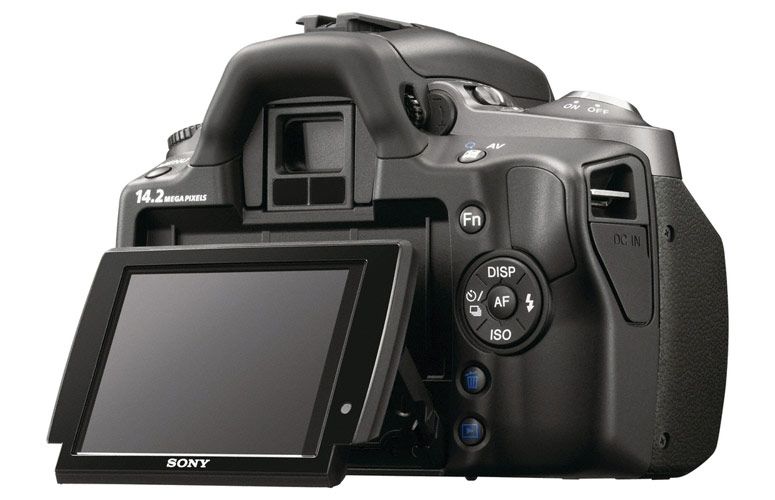
Located in the entry-level entry-level camera category, the A380 rivals the Canon EOS 500D and Nikon D5000. In particular, like Sony’s earlier DSLRs, the Alpha A380 is compatible with the lenses that Minolta produces.
The most important part of the A380 is the 23.5 x 15.7 mm APS-C 14.2-megapixel image sensor, similar to the A350. The ISO range of the machine is in the range of 100 to 3,200. Resolution range is more than enough for the needs of the majority of users, even with professional photographers. However, this sensor still belongs to the CCD, which in part results in lower processing rates and consumes more power than comparable CMOS chips. In return, Sony has integrated SteadyShot anti-shake technology on the sensor. Thus, this function can work well on all of its compatible lenses, although you will not see the anti-shake effect on the viewfinder or on the screen when Live View is enabled.
Similar to the A300 and A350, the Live View feature does not use the 14.2 Megapixel main sensor to capture images, but uses a secondary sensor located just in front of the viewfinder. When launching this feature, instead of projecting light into the viewfinder, the prism housed in the camera rotates a small angle that places the light on the secondary sensor to transmit the image to the screen. As such, autofocus (AF) will not be performed through intermediaries such as Canon and Nikon cameras. The camera’s focus speed will increase dramatically, reducing Live View interference or mirror noise when the shutter button is pressed. This also means you can switch back and forth between the two Live View modes – view through the viewfinder very quickly and smoothly.
The A380’s display remains unchanged against the A350. The 2.7-inch LCD, which measures 230,400 pixels, is slightly above the Nikon D5000 (230,000 pixels), but still lags far behind the 920,000-pixel Canon EOS 500D. This screen can flip up and down to help viewers take pictures at low or high angles out of reach, but not rotate as flexibly as the D5000.
Targeted for beginners or people who want to save money, the A380’s control system is redesigned to make it easier, more intuitive. In the default mode, the on-screen interface displays the most up-to-the-minute individual information such as ISO control, exposure, aperture control, and two other controls. Even the camera also provides fun graphs to help users calculate the depth of field to match. The buttons and rotary keys are also redesigned to avoid confusion such as the A350. Sony also decided to reduce the size of this popular DSLR down to competitors from Nikon and Canon. In particular, the machine is equipped with a button with Smart Teleconverter function similar to digital zoom on the compact. The camera has two digital zooms of 1.4x and 2x, which work only in Live View mode. The weight of the machine does not count lens only stops at 490 grams, very convenient to carry long travel.
Sony Alpha A380L 14.2 MP Digital SLR Camera with Super SteadyShot INSIDE Image Stabilization and 18-55mm Lens: Buy it now
It also comes with a dual card slot that supports the SD and Memory Stick Pro Duo format (which is Sony’s expensive proprietary format), much like the high-end Nikon D300s. You can switch back and forth between the two cards or choose a memory card to save money.
On the downside, the machine has a relatively low shutter speed of 2.4 frames per second, no improvement over the A330, even a bit slower than the A350 and the Nikon D5000 at 4 fps . The speed of machine is fast, only 0.6 seconds, but it’s not as good as the 0.2 second flash on the Nikon D5000 and Canon EOS 500D. Obviously, this is not a viable option if you want to use the A380 to take snapshots such as sports photography, kids or reportage. Ability of noise cancellation of the machine is not impressed.
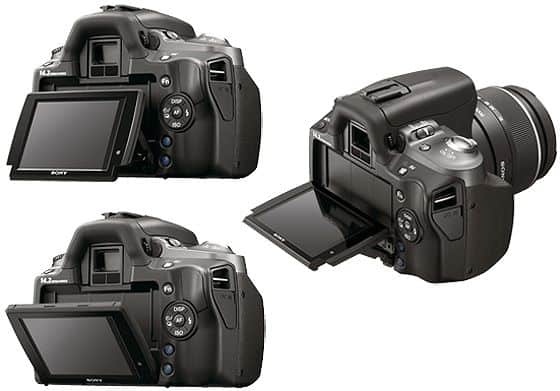
At low ISO, the image is quite sharp and colorful, but in some cases there is a large deviation in color. Color also began to change on the shots at ISO 800 and as the ISO 1600 increased the picture faded and lost details. In general, the high resolution of the sensor not only does not help sharpen the picture, but sometimes also makes noise appear in some dark areas at ISO 400. The machine is also not equipped with movie features that are very popularity of the Canon and Nikon DSLRs is that they are not cheaper than their competitors. The features of the Sony are thoughtfully designed in a user-friendly interface but confuse the user when they have to manually set the color, contrast and sharpness of the image in each style. Even white balance of the machine is not very good performance, color usually tends to sharp when shooting in complex lighting conditions.
The A380’s display is bad for showing only about 90% of the frame when the Live View feature is enabled due to the limited design of the secondary sensor. The viewfinder is 90% more visible, but it’s also hard to see due to its small size. However, this is also the general limitations of the DSLR with such price range.
Image Quality
14.2-megapixel APS-C CCD sensor — bigger than what you’d find in a compact camera, which buys you better image quality, more control over depth of field, and noticeably better low-light performance. CCD’s older tech at this point, but it still does color and detail justice.
It’s built on the Sony Alpha mount, so the lens options are wide open — Sony and third-party alike. Kit lens is typically the 18-55mm f/3.5-5.6, a fine general-purpose lens that covers landscapes through portraits. Beyond the kit lens, the mount supports wide-angle, macro, telephoto, whatever you want to build toward.
Color’s natural without being flat — vibrant, but believable, and skin tones come out well, which makes this a solid choice for portraits. Dynamic range is adequate for typical shooting; it just won’t dig detail out of a really tricky scene the way a newer sensor would.
Autofocus is 9-point phase-detection with a cross-type center point, which was the standard setup for entry-level DSLRs back then. Fast enough in decent light, but it starts to struggle once things get dim or a subject moves quickly.
Burst shooting is capped at 2.5 fps, and the buffer isn’t deep — fine for everyday shots, not built for sports or anything fast-paced.
Battery life is genuinely good here: around 500 shots per charge on the NP-FH50, enough to get through a full day without worrying. Still, pack a spare if you’re traveling.
Live View is there if you need it — useful for awkward angles, but slower overall, and autofocus in that mode switches to contrast-detection, which takes longer to lock on than the viewfinder does.
SteadyShot stabilizes by shifting the sensor itself, and it actually helps — handheld shots at longer focal lengths or in low light come out noticeably sharper. It’s not magic, but it tips the odds in your favor.
Scene modes cover the basics — portrait, landscape, macro, night — plus some creative filters if you want to play around. You get real manual control too: white balance, exposure compensation, picture styles, all through a menu that’s clean enough not to intimidate a beginner.
What’s good: easy to pick up and use, solid image quality out of that APS-C sensor, stabilization that actually earns its keep, and a Live View mode that’s handy when you need it. What’s not: a dim, low-res screen, video that never goes past 720p, autofocus that shows its age, and a burst rate too slow for anything fast-moving.
Good pick if you’re starting out or just want a dependable camera for everyday shooting — and picked up used or at a lower price, it’s still a genuinely reasonable way into DSLR photography without spending much.
Related Posts

Tech Reviewer & Product Analyst
Định Bia has spent over 10 years testing consumer electronics with a focus on smart technology. He work as a product advisor at Biareview where he helped customers find the right devices for their needs. He personally tests every product featured on this site using a consistent evaluation framework covering quality, durability, and value. All reviews are based on experience, not influenced by the manufacturer.