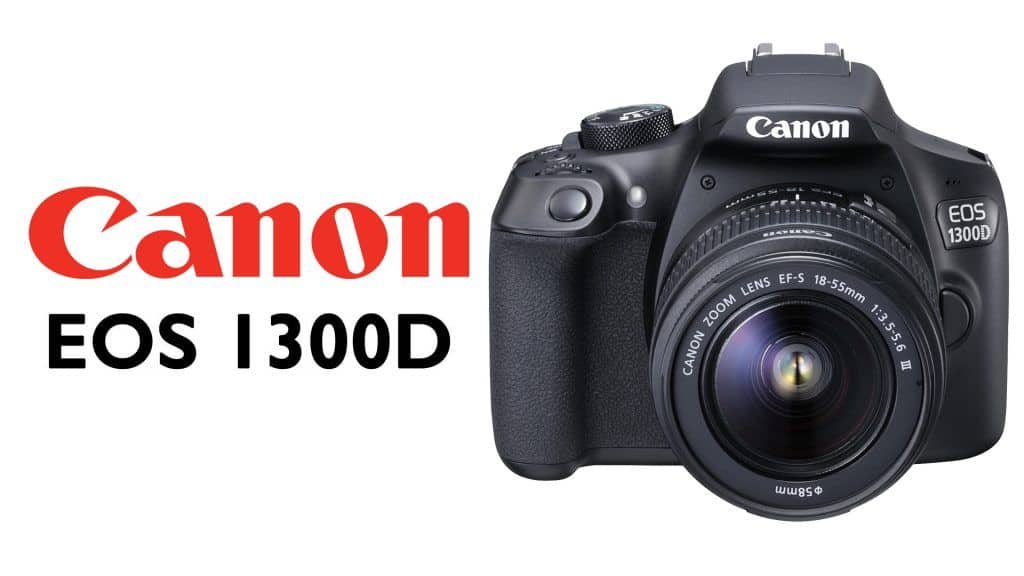
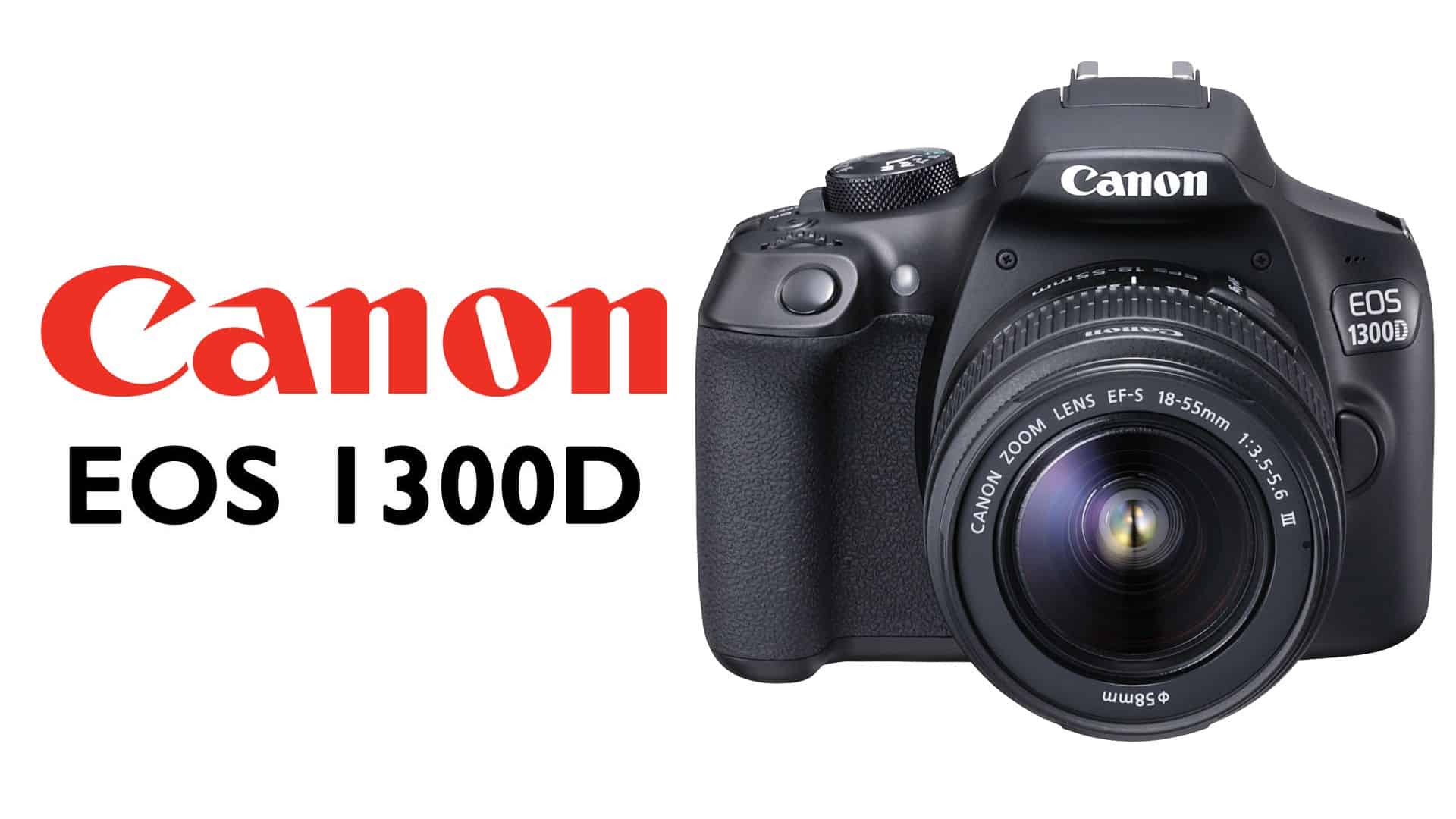
Accessories contained inside the box include the body itself, a Canon camera strap, number 8 charger and charger cable, a mini USB cable, and 1 battery.
The Canon 1300D is relatively compact compared to advanced DSLR counterparts; however, craftsmanship is to be treasured. The casing is hard alloy, and the hump on the right side is rubber for high grip in firm hands. It also has a built-in flash, a built-in microphone for movie recording, and a speakerphone for live video playback.
Compared to its predecessor, the Canon 1200D, this camera is now equipped with the features of Wi-Fi and NFC connectivity for easy transfer and wireless printing of photos, plus more capture modes and enhanced balancing abilities.
Canon 1300D configuration: 18 MP resolution, APS-C CMOS sensor, autofocus system 9-point, DIGIC 4+ processor, ISO up to 12,800 (If set ISO Auto only run from 100 to 6400), shoot 1,100 uninterrupted digital pictures within 3 frames per second. Extremely beneficial in the event that you intend in expressing your creativity through Time-lapse movies and allow for continuous shooting, thereafter joining them together to form a stunning time-lapse production.
The camera is capable of making motion pictures at 1080p resolution at 30 frames per second, but if the frame size is lowered to below 720p, this can go up to 60 frames per second.
The grip feels very comfortable since it is compact, the rear keys are of medium size, being easy to press only with your thumb. The display measures 3″ with a resolution of 920,000 dots and no touch screen. On the exterior, the screen appears to be fine, but the display quality is extremely poor; colors are washed out and details are practically not felt.
A large wheel toward the body top changes from shooting to movie recording, while there is just one gear for modifying either shutter speed or aperture. It acts according to the shooting mode selected. If you are accustomed to shooting mainly in Av or Tv mode, that single gear will be enough for you. However, if you also intend to shoot in M, then be prepared for significant screen time to do so.
Processor-wise, the Cannon 1300-D is based on an old DIGIC 4+ engine. Nevertheless, overall performance-wise, this camera is more than decent. Fast menu manipulation, with even fast capturing and storing, then reviewing photos without any lag; only at times during zooming does the processor feel a bit sluggish. After zooming deep into the picture, it takes longer for the machine to clear from the blurred image, which sometimes could be about a second.
Canon EOS 1300D EF-S 18-55mm 18.7MP CMOS 5184 x 3456 Pixels (Black) – International Version (No Warranty): Buy it now
Canon EOS 1300D / T6 EF-S 18-55mm 18.7MP CMOS 5184 x 3456 Pixels (Black) + 16GB SD Card: Buy it now
Performance
Autofocus System
The Canon EOS 1300D has a 9-point autofocus (AF) system, with the middle cross-type point for extra accuracy. The AF system is somewhat basic but works good enough for most general-purpose photography. Under good lighting conditions, it does a fair job of locking on quickly and accurately to subjects. However, it struggles a little in the dark, with a rather sluggish focus-acquisition time.
Continuous Shooting
Burst mode caps at 3fps. Slow, but it’ll cover a kid’s soccer game or anything that isn’t truly fast. The buffer’s tiny, though — shoot more than a few frames in a row and the camera stalls to write to the card.
Viewfinder
Bright, high-contrast, and covers 95% of the frame at 0.8x magnification — parallax isn’t a problem you’ll notice. That last 5% you don’t see rarely matters; every entry-level DSLR does this. You do get focus points, exposure, and battery info in there.
Features
Built-in Wi-Fi and NFC
Wi-Fi and NFC are built in — get photos onto your phone for Instagram or backup without a cable. Camera Connect handles the transfer and lets you trigger the shutter remotely. NFC just makes the initial pairing faster.
Scene Intelligent Auto Mode
If you’re not ready to touch settings yet, this mode reads the scene and picks everything for you. It’s exactly what a beginner wants: point, shoot, don’t think about aperture.
Creative Filters
A few in-camera filters are tucked in here — black & white grain, soft focus, fish-eye, toy camera, miniature. Fun to mess with. Whether you’ll actually use them past the first week is anyone’s guess.
Image Quality in Detail
Colors
This is where the 1300D does well. Colors come out punchy straight out of camera, no editing required. Standard Picture Style is the default and handles most everyday shooting; switch to Portrait, Landscape, Neutral, or Monochrome when you want something different. Shoot RAW and you get full control later if you want it.
Dynamic Range
With a dynamic range that is up there for the class, the EOS 1300D does a fairly good job of retaining detail in shadow and highlight areas. While it will not perform as well as some advanced cameras, it does hold its own in this class. RAW provides the photographer with the best chance for retrieving careful detail in high-contrast situations during post-processing.
Sharpness and Detail
An 18MP sensor is, in fact, a great seller for the EOS 1300D, and when combined with good lenses, can yield results that will astound most photographers. The anti-aliasing filter reducing any moiré and false color adds to its already sharp image quality. But resolution might not be all that high in comparison with some new cameras; but resolution-wise, it’ll do just fine for most printing and uploading.
Ergonomics
Menu
Menus are laid out the way you’d expect — nothing clever, nothing confusing. Text’s readable, the D-pad and dial move you through options fast enough that you’re not fighting the interface. Quick Menu handles the stuff you touch constantly — ISO, white balance, drive mode — so you’re not diving into submenus for every little change.
Battery Life
LP-E10 gets you around 500 shots, depending on how trigger-happy you are. A full day of normal shooting won’t drain it. Bring a second one anyway if you’re traveling — cameras have a way of dying at the worst moment.
Construction and Design
Polycarbonate, not metal, but it doesn’t feel like a toy. The buttons have a solid click, the dials don’t feel loose, and the whole body holds together the way you’d hope for something in this price range. Just don’t take it out in the rain — there’s no weather sealing, and it won’t forgive you for trying.
Connectors and Storage
Memory Cards
The EOS 1300D uses SD, SDHC, and SDXC memory cards for storage. SD cards are available in a wide variety of costs, capacities, and speeds, and are affordable. The camera is compatible with UHS-I cards, which are faster in their read and write speed than the regular SD cards. This facility is quite useful for continuous shooting and transferring images to a computer.
Connectivity
In addition to Wi-Fi and NFC, the EOS 1300D provides a mini USB port for transferring pictures to a computer and a mini HDMI port for connecting to a television or monitor. There is a 3.5mm microphone input for video shoots that demand good audio. These connectivity options give flexibility to many shooting and sharing environments.
Real-World Performance
Landscape Photography
The Canon EOS 1300D finds itself carrying out beautifully in landscape photography since it possesses good dynamic range and color reproduction and produces sharp images. Therefore, the camera is small and light, making for easy portability during hikes or trips. It offers RAW format shooting for more extended post-processing performance for the final image. Furthermore, landscape shots done well can be further improved by using good lenses, such as the Canon EF-S 10-18 mm f/4.5-5.6 IS STM.
Portrait Photography
Being able to render color accurately and give pleasing skin tones, the portrait capabilities of the EOS 1300D are very good. An accurate focus is assured on the subject by employing a 9-point AF tracking system, which also has the provision of employing the built-in flash for fill light. Excellent portrait results with beautiful background blur can be produced when paired with a fast prime lens like the Canon EF 50mm f/1.8 STM.
Sports Action Photography
Where sports and movement photography are concerned, the Canon EOS 1300D cannot be called a sporting camera; however, it can still be considered a fair performer in this area. The continuous shooting rate of 3fps and the fairly reliable 9-point AF system equip the camera to shoot with moving subjects. But considering the limited buffer, the camera would cease after a long burst of shots. In a casual environment, EOS 1300D would manage to get a few decent shots, but photographers will have to work with the timing of their shots and should anticipate some limitations with respect to the more advanced models.
Wildlife Photography
Giving its best working with telephoto lenses, the Canon EOS 1300D is still fair when considering wildlife photography. The 1.6x crop factor of the APS-C sensor boasts its capabilities to udden distance with the subject. The simple 9-point AF system can do its job commendably well in display lighting whereas lower burst and buffer capacity are limitations the camera imposes on fast-moving wildlife capture.
Macro Photography
Color and detail hold up in macro too. Get the EF-S 60mm f/2.8 Macro USM on there and the close-ups actually have some bite to them. Live view is the real trick for macro — manual focus is so much easier when you can zoom in on the screen and actually see what’s sharp.
Street Photography
Small, quiet, doesn’t scream “camera” — which is most of what you want shooting candids. Nobody clocks you as a photographer when you’re carrying something this size. Image quality holds up fine, and the flash is there if a scene gets too dark to expose properly.
Travel Photography
This is arguably the camera’s best fit. Light enough to not resent carrying all day, Wi-Fi and NFC for dumping photos to your phone at the hotel, and enough lens options to cover a landscape one minute and a portrait the next without swapping bodies mid-trip.
Video Performance
Full HD Recording
1080p, 30/25/24fps. Fine for casual video, nothing that’ll make a videographer switch systems, but nobody buying this camera is choosing between it and a Cinema EOS body. No 4K here, and it’s hard to argue that’s a real loss for this price point.
Autofocus in Video Mode
The contrast-detect autofocus in video mode is much slower and less reliable than that employed for stills with phase-detect AF. So, in some situations, especially low-light or subjects in motion, focus hunting becomes much visible. So, for accurate focus during video recording, it is recommended to use the manual focus option.
Audio Quality
The built-in mono microphone of Canon EOS 1300D captures decent audio for informal video recordings. But not quite up to the quality of external microphones. Luckily, the 3.5mm microphone input makes it easier for users to connect external mics to gain better sound quality.
Edit and Software
RAW Processing
One important benefit of the Canon EOS 1300D over many other cameras is the ability to shoot in RAW format. This means the photographers can capture everything from the sensor in RAW format and then make many changes through post-processing without jeopardizing quality in images. They can fine-tune exposure, white balance, contrast, stuff like that, through software like Adobe Lightroom or Camera Raw and Canon’s own Digital Photo Professional.
In-Camera Editing
The DSLR camera has the most basic in-camera editing processes. It could crop images, resize images, and apply certain creative filters. Although these in-camera functions are welcome when very quick fixes need to be applied, anything that requires more detail and specific retouching should be done in specialized software installed on the computer.
Canon Camera Connect App
The Camera Connect app lets you control the camera remotely, pull images over to view or transfer, and tweak settings, all from your phone. It’s straightforward to set up, and once it’s paired, getting a photo onto Instagram or off to a group chat takes seconds instead of a cable.
Conclusion
The Canon EOS 1300D is an entry-level DSLR that performs reasonably well whilst being fairly priced and fully functional. With good features for the beginner and amateur photographer, it serves as an appropriate platform on which to learn and experiment in photography. It might not have the sophistication of newer cameras, but for the ones who are beginning their photography career, in terms of operating capabilities, image quality, and user-friendliness, this camera is an investment worth making.
Pros
Cheap and accessible entry-level DSLR
Fine image quality with true colors
Simple and user-friendly control layout
Wi-Fi and NFC for easy image-sharing and remote control
Sturdy build quality and ergonomic design
Compatible with a large assortment of Canon EF and EF-S lenses
Pretty solid battery life for long shoots
Can shoot RAW for comprehensive post-processing
It has a nine-point autofocus system for basic use that fails mostly in low-light conditions. Its continuous shooting speed is rather slow, with only a limited buffer capacity for extra-captures. Its major downside is its incapability to record 4k video. Contrast detect autofocusing is a little slow and pretty much unreliable during recording mode. The camera has no weather sealing for protection from those rainy conditions, so photographer professionals will have to do with that one. Compared to new models, it has a modest dynamic range and high ISO performance.
Thus, it is Canon EOS 1300D that creates and continues being a popular fine camera for any beginner or shall we say, frugal photographer. Such a fine camera, having really good quality in the images it captures, easy to use, and, of course, affordable enough for the majority of budget-hampered individuals, is where any budding photographer could explore the world of DSLR photography without going broke. Be it a landscape, a portrait, or a daily scene, an EOS 1300D will help all photographers develop skills and send out their creative vision as a trendy camera.
Related Posts

Tech Reviewer & Product Analyst
Định Bia has spent over 10 years testing consumer electronics with a focus on smart technology. He work as a product advisor at Biareview where he helped customers find the right devices for their needs. He personally tests every product featured on this site using a consistent evaluation framework covering quality, durability, and value. All reviews are based on experience, not influenced by the manufacturer.