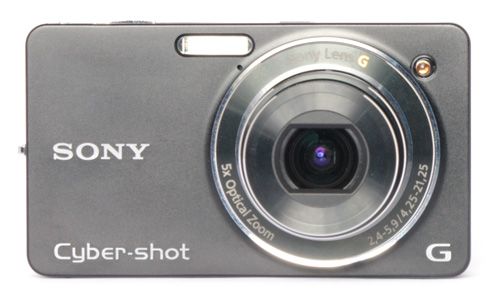
Made of metal body but neatly designed, the WX1 is compact enough to carry anywhere. Inside the bold body of this technology is the new generation Exmor R sensor, Bionz image processing system, optical image stabilization system … As usual, with the Sony version, WX1 memory card support Memory Stick Pro Duo with built-in 11 MB built-in memory.
The traditional image sensor structure places the circuits and wires underneath the color screen but above the light sensor surface. This architecture limits the amount of sensible light that can be received. The new generation Exmor R sensor has a reversed architecture, and these circuits and wires are moved down the light sensor surface. Because there is no light barrier, the sensor can capture more light, so the sensitivity will be better, according to the company, which will be about double that of traditional sensor architectures.
Similar to other Cybershot streams, the WX1 is prone to full auto-focus, but still leaves some modes that allow users to manually adjust the ISO, white balance and exposure compensation.
Despite its small size, the console of this version is still unadorned. The controls are placed neatly in two adjusting circles on the back of the machine. But due to limited area, the power button is slightly small and sometimes difficult to press, the rotation is adjustable too, a bit tight and easy to turn so it is possible that people with big hands when taking pictures. Slipped to other modes. In addition to some of these inconveniences, in general the other keys are accessible quite easily and conveniently.
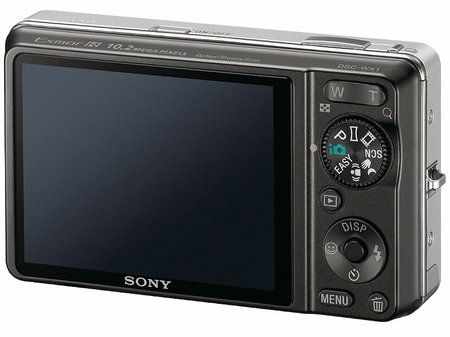
The menu system of WX1 is quite logical and friendly, easy to find though not as simple as the version of the other competitors. The 2.7 inch screen is a reasonable size, not too big but not too small, enough for menu access and viewing.
WX1 offers a number of preset default modes, including Easy, Intelligent Auto, Program-held, Hand-held Twilight, and Anti-motion blur, sweep panorama and dynamic range optimizer (Dro). Notably, special features such as Hand-held Twilight capture 6 frames and combine them into one for maximum noise reduction. Anti-motion blur also allows for 6 shots. 1 analog photo, and stylish panorama mode Sweep Panorama.
The WX1 is capable of 720p and VGA video recording at 30 frames per second (but mono audio). Noteworthy is the 5x optical zoom and a host of other advanced features such as white balance, ISO, DRO can be used during filming.
In light conditions indoors or in the dark, the image quality of the WX1 is quite good. However, this quality is not stable. When shooting outdoors with full light, the flashing area sometimes burns, the auto white balance is not good so there is still the phenomenon of displaying inaccurate color.
WX1 has a relatively fast speed compared to its competitors with the same delay time of 0.01 seconds. Focus speed is 0.26 seconds, but continuous shooting mode is quite impressive, 11.4 fps.
Sony Cyber-shot DSC-WX1/B 10MP “Exmor R” CMOS Digital Camera with 5x Optical Steady Shot Stabilized Zoom and 2.7-inch LCD (Black): Buy it now
Sony Cyber-shot DSC-WX1: Buy it now
Sony Cyber-shot DSC-WX1 10MP Exmor R CMOS Digital Camera with 5x Optical Steady Shot Stabilized Zoom and 2.7-inch LCD (Gold): Buy it now
Sony Cyber-shot DSC-WX1 10MP Exmor R CMOS Digital Camera with 5x Optical: Buy it now
The WX1 is equipped with a SteadyShot IS Optical Image Stabilizer for lenses and digital shake control (by pushing ISO). The focus speed is quite accurate, even in low light conditions. The battery for the WX1 NP-FG1 3.6V allows up to 350 shots per charge, ensuring a full week of use with regular users.
Instead of the usual 3x on pocket machines, the WX1 is equipped with a Sony G lens with 5x optical zoom and a wide, 4.25 – 21.25mm f / 2.4- f5.9 (equivalent to 24x optical zoom). -120 mm). Although the zoom is quite long, but when the power off, the lens almost completely indented, so the WX1 still holds a lightweight look. The test image shows a good central focus, but at the widest corners the imaging areas tend to fade. The purple, glitter, distortion effects … are pretty well controlled and nothing to complain.
Wide-angle contrasts are excellent, but the telephoto focus range is diminished. In addition, this version does not support macrro shooting, the nearest shooting distance is still about 5 cm.
WX1 shoots video at both 720p and VGA resolution at 30 frames per second, however, the sound is only mono instead of stereo. The minimum length for each segment is about 30 minutes (2 GB). The WX1’s advantage is that support for low-light shooting and optical zoom is fully supported with video.
According to the Digital Camera Review, with many new features, especially features to support capture and video in low light thanks to the new design sensor, WX1 is ideal for those who have to shoot at night. Along with a host of other advanced features like 720p HD video recording, 5x optical zoom, 24mm wide-angle lens and compact size, the WX1 is not as trendy as the Sony T series but compact and versatile enough possible carry anywhere.
Image Quality
Sensor and Resolution
The WX1’s 10.2-megapixel sensor was Sony’s first real swing at backside illumination in a compact, and it showed. More light sensitivity, less noise — the kind of improvement that mattered more than another few megapixels would have. 10.2MP looks small now, but that was never really the pitch here.
Colors are accurate, well-saturated without looking fake. Dynamic range holds up better than you’d expect from something this size, pulling real detail out of shadows and bright spots alike — useful the moment you’re shooting anything with harsh contrast.
The lens runs 24-120mm equivalent at f/2.4, bright for a pocket camera of any era. It’s sharp through the zoom range with barely any distortion, and the stabilization does real work at the telephoto end or in a dim room where your hands would otherwise ruin the shot.
Autofocus is contrast-detection, typical for its time — fine with anything sitting still, slower once things start moving or the light drops. Single and continuous AF cover what you’d expect.
Burst mode is genuinely slow: 1.5fps. Not a typo, just how things were back then. The buffer handles a short sequence fine, but you’re not freezing a sprint with this camera. Shutter lag stays low for casual shots, though it hesitates a bit if you’re firing off shots quickly.
Battery gets you 200-250 shots a charge — enough for a normal day, tight if you’re out longer without a backup.
The sensor is the real story here, and deservedly so — noticeably better in low light than a typical compact from a year or two earlier, with noise kept under control for indoor and evening shots. Sweep Panorama is the other thing worth mentioning. Sweep the camera across a scene, and it stitches the shots together on its own — no tripod, no manual alignment, just point and move. It works, and it’s surprisingly painless for how early this feature was.
Scene modes cover portrait, landscape, macro, night, the standard set, with a few creative filters thrown in if you want to play around. Stabilization helps, though it’s not magic — push to max zoom in very dim light and you’ll still catch some blur.
Against anything current, the gaps are what you’d expect: sensors now run 20 to 60-plus megapixels with backside illumination as the default instead of a novelty. Autofocus has moved to hybrid systems with real subject tracking. Video’s jumped to 1080p and 4K, where the WX1 never left standard definition. And there’s no wireless connectivity at all — you’re pulling files off by cable, every single time.
Day to day, the interface is simple clear buttons, a menu you can figure out without help. Buttons run small if your hands are big, though everything’s close enough to reach on a camera this size. In daylight it performs well sharp, accurate, good for landscapes and portraits. Low light holds up fine for its time, though a modern sensor will just do more with less. Action is the weak point slow burst, ordinary autofocus, fast subjects are a coin flip.
Here’s the trade: genuinely solid image quality for a compact this old, a panorama mode that’s actually pleasant to use, decent stabilization, and a brighter lens than most pocket cameras got. Against that: limited resolution now, a screen that fights you in sunlight, slow bursts, and no connectivity whatsoever. Sony was pushing the sensor forward here instead of just chasing megapixels, and that still shows if you pick one up — you just get it bundled with everything else that comes from a camera this old.
Related Posts




Tech Reviewer & Product Analyst
Định Bia has spent over 10 years testing consumer electronics with a focus on smart technology. He work as a product advisor at Biareview where he helped customers find the right devices for their needs. He personally tests every product featured on this site using a consistent evaluation framework covering quality, durability, and value. All reviews are based on experience, not influenced by the manufacturer.