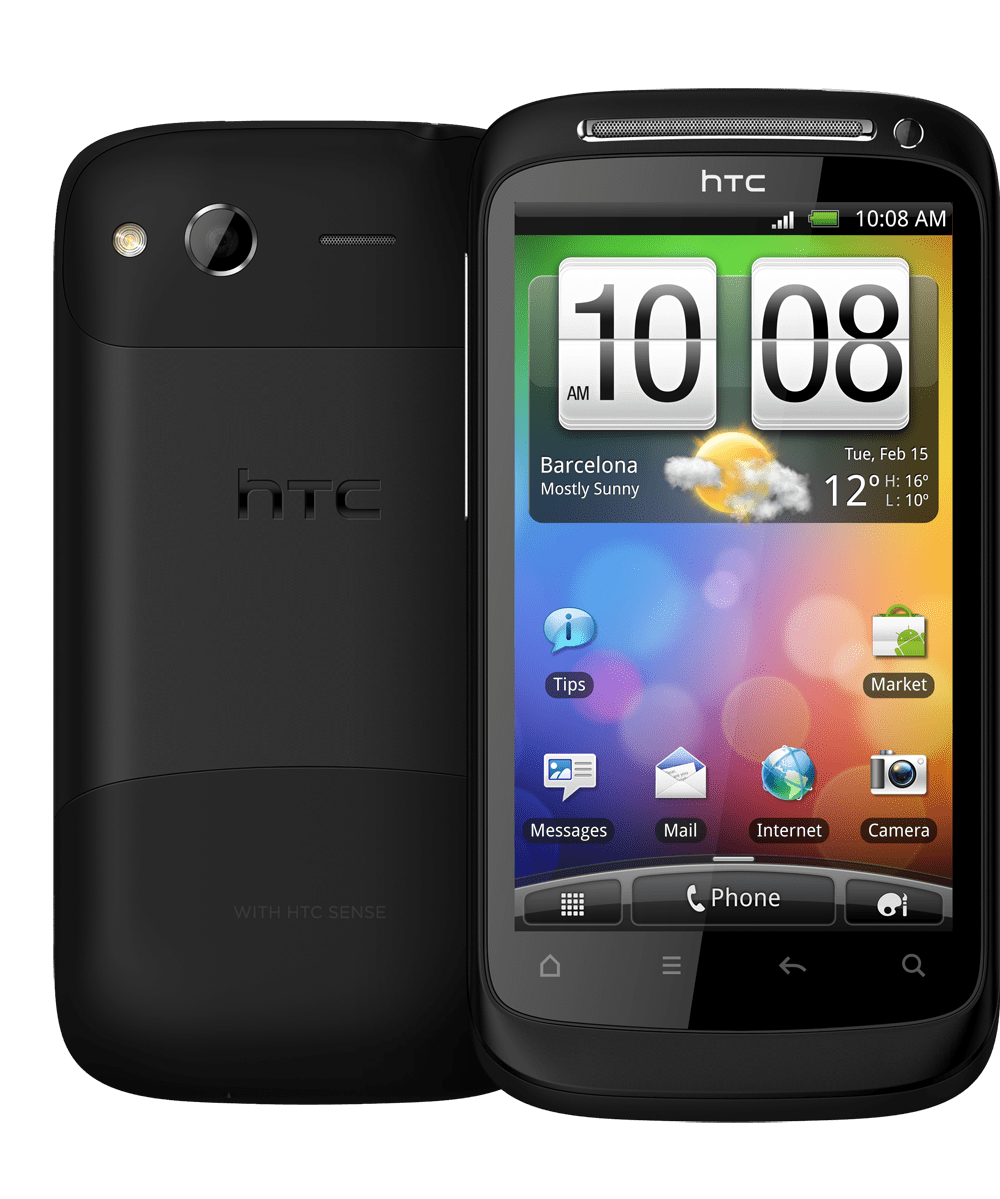
The aluminum structure makes up for almost the entire body and two plastic covers on the back of the HTC Desire S make it easy to recall the HTC Legend. The machine is not bent up at the bottom as Legend, but only a small edge. The highlight, as well as the biggest difference compared to the “elder” Desire is that the front panel is no longer used navigation optical navigation and physical keys, but instead is a sequence of touch functions. The microUSB connector has also been shifted to the right instead of the bottom as in the Desire. The front-facing speakers have been extended as well as the availability of a secondary VGA camera for video calling.
Design and Build Quality
The HTC Desire S was notable for its sleek design and high-quality build, which contributed to its premium feel and robust construction.
Dimensions and Build
The HTC Desire S came in at 115 x 59.8 x 11.6 mm, it also weighed around 130 grams. In general the shape felt pretty well-balanced, like it was meant for a comfortable grip even after some time, and handling was pretty easy too. The build was solid in the hand, it uses a unibody aluminum approach which helped with durability and gives that slightly more refined , sophisticated look. Honestly the device felt sturdy, and the premium materials used inside and outside really added to how it “feels” overall.
Display
Up front there was a 3.7-inch Super LCD display. The resolution sat at 480 x 800 pixels, and honestly for that era it was kind of a nice spot , not overly large but still usable every day. The Super LCD tech delivered bright colors strong contrast, and wide viewing angles, so it worked out for multiple uses like web browsing, media watching, even a little casual gaming.
Now the 480 x 800 layout works out to about 252 pixels per inch (PPI), so it wasn’t at the level of later phones, but it still managed to look sharp and clear. The brightness and color reproduction were excellent, and that made a noticeable difference when you were using it in different lighting, like indoors vs outside.
Design Elements
On the front of the Desire S you could see a smooth, sort of curved design, with that physical button layout that has a Home button, a Back button and also a Menu button sitting under the display. The whole thing looked clean, minimalistic even, like the controls were just smoothly part of the overall look ,not something tacked on. It was not flashy, more like quiet confidence, if that makes sense.
Up top, the device kept the power button along with the 3.5mm headphone jack. Then the bottom area had the micro-USB port, used for charging and for data transfer. On the back, most of the attention went to the 5-megapixel camera, plus a single LED flash, centered up where you’d expect. The HTC logo was placed in a subtle way on the rear too, adding that understated elegance without screaming.
Overall the HTC Desire S design felt like a real step forward from the previous one, with a more refined look n feel that seemed to relate with people who were after a higher quality smartphone experience, you know the kind that just feels well finished, more or less polished.
Display and Touchscreen
The display on the HTC Desire S was basically one of its big selling points, made to give an engaging and almost immersive user experience.
Screen Size and Resolution
That 3.7-inch Super LCD screen struck a balance, a size that was easy to handle with one hand, while still leaving enough screen space for all sorts of apps. The resolution, 480 x 800 pixels, covered most everyday needs, things like web browsing, watching videos, and even gaming. And the pixel density of 252 PPI helped keep text and images crisp enough ,so the overall experience stayed pretty pleasant.
Touchscreen Performance
On the Desire S , the capacitive touchscreen felt pretty fast and responsive, and it also supported multi touch gestures, so you could move around without much fuss, interacting with the operating system in a smooth manner. The touch sensitivity seemed accurate, most of the time, with very little lag or delay when you tapped or dragged. That quick reaction mattered a lot for things like typing, swiping, and zooming , which made the whole device kind of intuitive, and honestly easier to use day to day.
Display Quality
The Super LCD panel on the Desire S gives vibrant colors and those deep blacks that help the contrast look strong, plus brightness that stays decent. You notice it most when you watch photos, videos, or other media. Even in different lighting, the screen still held up well, with good readability both indoors and outside, so it didn’t suddenly become hard to see just because the light changed.
Camera Performance
The main camera on the Desire S produces good images in regular lighting. But if you switch to flash, or go into macro shooting mode, the overall picture quality drops quite a bit, and you can tell the difference. For video, it can record up to 720p, and the results are roughly in line with what you get when taking photos, not flawless, but usable.
Battery, Speaker, and Build Notes
The Desire S has a removable battery, pretty much like the one you find on the HTC Legend. The process is: remove the back cover, then gently flip open the battery compartment for the battery memory card and sim card. The external loudspeaker is loud enough, and the sound comes out clear, without too much distortion.
HTC Desire S comes with a Snapdragon 1Ghz processor, 768 MB RAM, and a WVGA resolution screen. Honestly the whole feel, and that smoothness of the pictures shown on the Desire S display, looks way better than on the Desire before it, even though the older model used AMOLED screens. The amount of memory in Desire S is a reliable base too, for performance, and also for handling today’s user needs.
HTC Desire S also brings the newest Android 2.3.3 version from Google, with the latest Sense UI blended in. It’s pretty straightforward to get up and running , and then fine tune the settings of the device plus the app system.
HTC Desire S S510E Unlocked QuadBand GSM Phone with Android OS, 3.7″ Display, HTC Sense UI, 5 MP Camera, Wi-Fi and GPS–International Version without Warranty: Buy it now
Performance and Hardware
The HTC Desire S had hardware made to feel smooth and quick, and it basically leans on the Android operating system so everything looks responsive, at least most of the time.
Processor and RAM
It ran on a 1 GHz Qualcomm Snapdragon MSM8255 processor, that was a noticeable step up from the earlier model. This chip delivered plenty of power for apps and, handling multitasking while switching between screens without too much lag. It also had 768 MB of RAM ,which helped keep things moving in a pretty steady way across different tasks.
Storage
For storage, the Desire S shipped with 1.1 GB internal memory, and you could expand it with a microSD card slot. Having expandable space was useful, you know for apps, music, videos,and all those other small files people accumulate. The microSD slot supported cards up to 32 GB, so users who needed more capacity weren’t stuck.
Battery Life
The device used a 1450 mAh lithium-ion battery. In general, battery life was decent for a full day if you were doing moderate stuff like browsing the web, streaming media ,and normal phone calls. But if usage got heavier, for example gaming or longer video playback, then the battery might not last as long. The battery was removable, so carrying a spare was possible ,even if the overall endurance was fairly competitive for its era.
The newest Sense version on the Desire S 3-D picture design, updated the user input information, quickly and fairly lightly. HTC also bundles user-friendly utilities like Office, Kobo reader, and those real time FriendStream style visual updates (Facebook, Twitter, Flickr) and there is also digital media connection via Media Controller. Plus, it’s pretty easy to set quick customizable widgets on the Notifications bar …
The latest Google-y functionality for Android 2.3 is basically on the Desire S. Usually the idea is to use 3G alongside Wi-Fi. Honestly, the one I tested worked very well, even better than some phones that are still running Android 2.2, or that old Nexus One, which is also on Android 2.3 but in practice it’s different. Also, with solid hardware onboard, the software is still a bit resource demanding, like when downloading games from the Market, but the Desire S handles it smoothly enough. Still, when you actually live with it, playing games or using heavier software can get annoying because it kinda tangles with the touch-sensitive keys. The screen is only 3.7 inches, and the touch pad design is also very close to the screen, so it’s easier to press things by accident. Even if the display isn’t amazing, the virtual keyboard the HTC Desire S comes with makes up for it a little, letting you fine tune and edit, both left to right and up and down.
And about the battery, it has 1,450mAh capacity, but average performance plus the pre-installed apps ends up at about one day. There are other weak points too: the touch pad sits close to the screen, the camera quality doesn’t really “fit” the rest, and the processor doesn’t get upgraded to match the dual core trend.
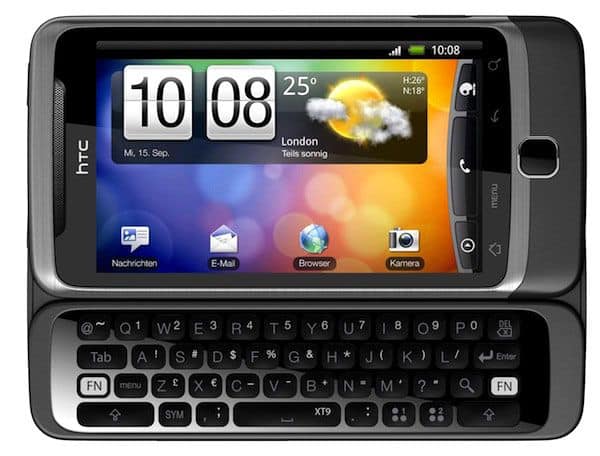
Software and User Interface
The HTC Desire S ran on Android 2.3 Gingerbread, with HTC Sense UI sort of layered on top. That mix Android plus Sense UI gave you what feels pretty user friendly, and somehow also feature heavy, like it just does more than you expect.
Android 2.3 Gingerbread
Android 2.3 Gingerbread was kinda a big step forward for Google’s mobile operating system. It did bring upgrades in speed, and the whole user interface , plus more general functionality. The system itself looked more polished too, with tweaks that made the everyday experience smoother ,and it also helped unlock new capabilities that were kind of waiting in the background.
On the Desire S, Gingerbread seemed to work in a smooth and responsive way, and it supported things like better multitasking, stronger copy and paste, and a refreshed virtual keyboard. Not just small stuff either, it felt like the phone was keeping up better.
HTC Sense UI
HTC Sense UI mattered a lot on the Desire S, because it wasn’t just a skin, it was a customized user interface with extra add ons and small improvements. Sense UI had widgets such as weather, calendar, and social media pieces, which meant you could reach important info and services pretty fast, without digging through menus all day.
It also gave a customizable home screen with multiple panels, so people could arrange everything, widgets plus shortcuts in their own style. There were also themes and visual tweaks included, that made the interface look more lively, and honestly more engaging.
HTC Customizations
HTC put in a few custom applications and little extras for the Desire S, you know, like HTC Hub , HTC Watch, and also HTC Sense Companion. Basically these additions gave more useful things to do, extra services, and it felt like the whole user experience was more complete.
With HTC Hub , you could reach a set of apps, widgets and themes without much fuss. HTC Watch, on the other hand, was more about buying and then watching movies and TV shows, pretty straightforward. As for HTC Sense Companion it was meant to deliver recommendations and small insights, kind of personalized, based on what the user does, their habits, preferences and all that.
Connectivity and Network
The HTC Desire S also came with multiple ways to connect, so users could stay online and reach different services.
Network Connectivity
The Desire S supported GSM service on the 850 , 900 , 1800 and 1900 MHz bands , plus 3G connectivity on the 900 and 2100 MHz bands. That coverage should work with lots of carriers too , which helped with stable voice calls as well as data transfer, when you needed it.
Wireless connectivity
The device featured Wi‑Fi 802.11 b/g/n support , which kinda lets people hook up to wireless networks for faster internet and less data usage, ya know. The Desire S also brought Bluetooth 2.1 , so it was good for wireless pairing with Bluetooth accessories like headphones, and small speakers too.
GPS and navigation
The HTC Desire S came with GPS, giving location services that support navigation and apps that depend on where you are. It also worked well with Google Maps and other navigation programs, so users got access to maps and turn by turn directions. In general the GPS performance was accurate enough, with steady location tracking and pretty solid navigation.
Strength
– Nice looking design, for sure.
– The screen is clear , and it looks beautiful .
– RAM advantage , actually helps.
– Android 2.3.3 built in latest version.
– The performance works very well .
– Good support job, plus entertainment features.
– Full , powerful connection.
Weak
– Hard to replace sim or memory card , mainly because the design.
– Battery life is short.
– The camera does not really match the level of the device performance.
– Single core chip.
Related Posts


Tech Reviewer & Product Analyst
Định Bia has spent over 10 years testing consumer electronics with a focus on smart technology. He work as a product advisor at Biareview where he helped customers find the right devices for their needs. He personally tests every product featured on this site using a consistent evaluation framework covering quality, durability, and value. All reviews are based on experience, not influenced by the manufacturer.