Review of design
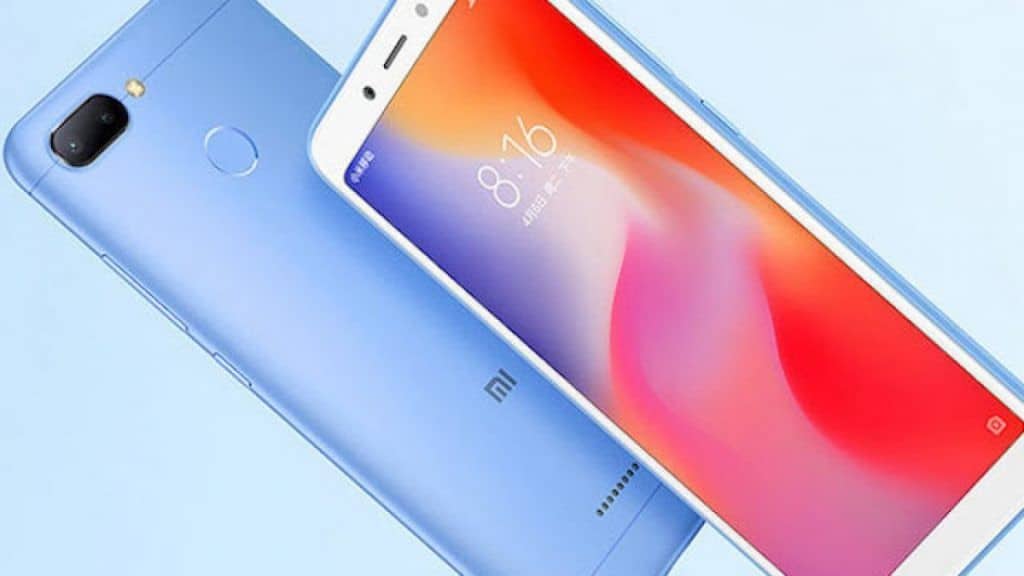
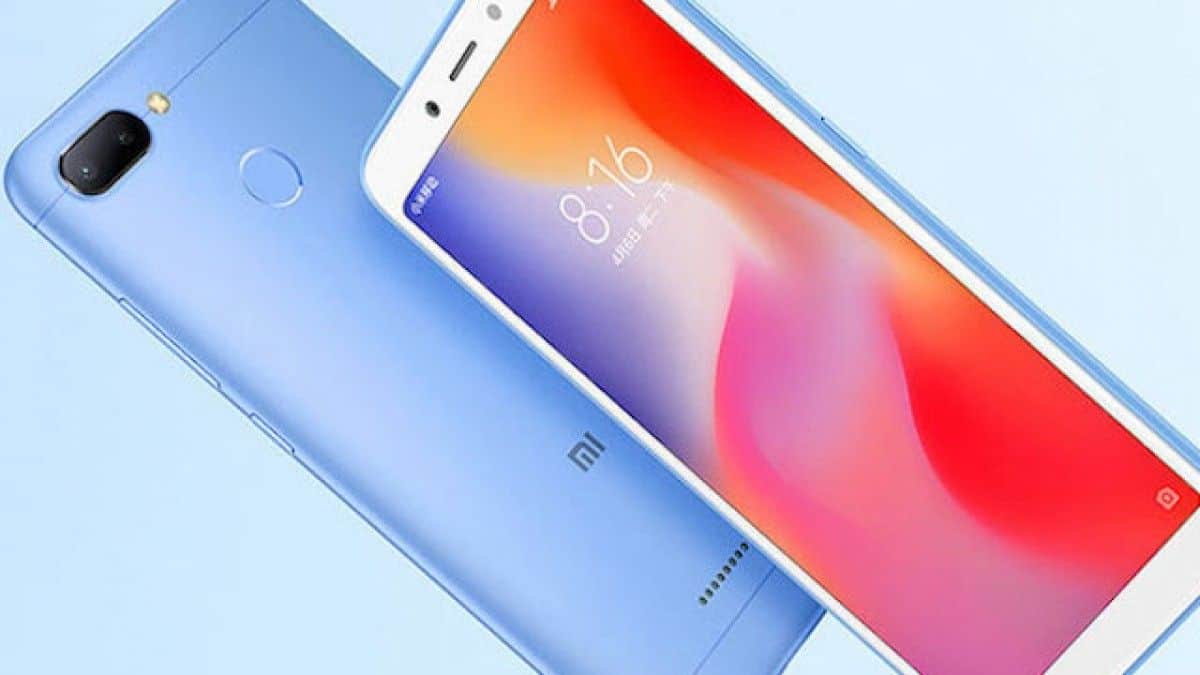
Compared to other phone products with the same price, Xiaomi Redmi 6 is a pretty good product with very convenient and quite good design components.
– Xiaomi Redmi 6 phone shell is made of plastic with fake metal paint skillfully ensuring aesthetics.
– 5.45inch screen, 19: 8 ratio compact with palm.
– HD + resolution with a pixel density of 295 ppi
– The phone has a 5MP front camera design at the top of the LED notification light, behind the camera cluster, LED flash and one-touch fingerprint sensor, the device can recognize the face but most people Use fingerprints for better convenience and security.
– The top of the device has a microphone and 3.5mm jack. The bottom is the micro USB and mic port. The control button is big and small, the power button is located on the right side. On the left is a sim tray that can fit 2 sim or 1 sim and 1 memory card.
Display
So the Xiaomi Redmi 6 comes with a 5.45 inch IPS LCD type display, and it runs at an HD+ resolution, 720 x 1440 pixels kind of, roughly like that. That lands you around 295 PPI , give or take a bit, which isn’t exactly the most razor sharp thing you’ll see on the market, but honestly it’s still totally fine for normal, everyday use you know. Also it uses an 18:9 aspect ratio which was getting pretty common around the time the Redmi 6 dropped, so you end up with a taller screen for a more immersive, kind of panoramic look when you watch stuff.
Display Quality
Even if it’s a budget phone the display still feels fairly solid. The colors look fairly accurate and vibrant, especially when you’re looking straight at it. The IPS LCD panel gives decent viewing angles too, so when you tilt it, there’s not much color shift, or weird distortion going on. Brightness is also satisfactory, the screen stays readable in most indoor settings and outside lighting as well. Still, when the sun is really direct, it can be a small headache, because you may need max brightness just to keep everything legible.
The only real downside is the resolution. HD+ is okay for basic tasks, but if you’re used to higher resolution panels you might notice the edges aren’t as crisp, especially with small text or those detailed images. That said, for a budget device the display resolution is pretty much in line with expectations, so it doesn’t really ruin the overall experience, despite what you might want from a more premium model.
Touch response and user experience
The touch response on the Xiaomi Redmi 6’s display feels smooth and responsive, like it never really hesitates, even when you are moving through the user interface or jumping between apps. You don’t notice lag or delay, which is pretty important day to day. It supports up to 10 touch points at the same time, and honestly that is plenty for most multitouch gestures as well as gaming. Touch sensitivity also stays steady all over the whole screen, so it feels seamless, and, weirdly enough, also frustration-free.
Overall , the display on the Redmi 6 might not be the most advanced panel or the highest resolution you can find, but the viewing experience is solid. It’s more than adequate for daily stuff like web browsing, watching videos, and using social media, without too many compromises.
Review about camera
The 5MP selfie camera setup delivers a pretty sharp image, and the built in effects look nice, not worse than what you’d expect from the rear camera or from similar product lines.
On the rear, the Xiaomi Redmi 6 basically carries a dual camera setup ,with 12MP plus 5MP. The camera panel sort of has a lightly convex look on the surface, and it can shoot the scene with a bright LED light assist, so you still get enough lighting for pictures. Images come out with beautiful natural colors, bright and clean, overall.
Performance
Processor and GPU
The Xiaomi Redmi 6 is run by the MediaTek Helio P22 chipset, it’s basically an octa core processor made on a 12nm manufacturing process. You get eight Cortex-A53 cores, clocked up to 2.0 GHz, and that gives a solid sort of mix between speed and power saving. Alongside it, the PowerVR GE8320 GPU is there, it takes care of graphics duties, and all that related stuff.
Honestly, for a budget handset the Helio P22 manages to feel pretty cap-able. It lets the Redmi 6 handle most everyday tasks without looking or feeling sluggish, and things like opening apps, web browsing, and that basic multitasking sort of stays smooth enough , so you won’t keep noticing delays or anything. For casual gaming, it works well too, “Subway Surfers”, “Candy Crush Saga” , you know those titles, load up and play fine. Still, when you push into heavier games such as “PUBG Mobile” or “Asphalt 9”, you might need to dial down the graphics options, because otherwise the frame rate can get a bit too unstable for comfort.
RAM and Storage
So the Xiaomi Redmi 6 comes in two different memory setups. There’s the 3GB RAM with 32GB internal storage option, and then the 4GB RAM with 64GB internal storage, yep. For most people the RAM on board is enough, you get pretty smooth multitasking, and app switching that doesn’t feel too laggy. The phone can run several apps in the background without too much drama, though, if you kinda like leaving a bunch of apps open at once, then the 4GB RAM variant is the safer pick.
Now for storage… the base 32GB can feel a little tight, particularly if you keep lots of photos, videos ,and downloaded stuff, plus apps and games that grow over time. Luckily, Redmi 6 has a microSD card slot for expandable memory, so you can add a card up to 256GB. That means you can raise the available space fairly easily, without needing to depend too much on cloud syncing or doing the whole thing where you delete files too often.
Benchmark Performance
In those benchmark tests , the Xiaomi Redmi 6 does pretty well, like, especially for a budget phone. In AnTuTu it lands around 75,000 up to 80,000 points, so it feels pretty much in line with other devices from the same price bracket. So yeah, it’s not exactly a powerhouse , but it still seems able to manage daily routines and casual gaming , without too much trouble or sudden hickups.
On Geekbench, the Redmi 6 pulls in something like 800 to 850 points for the single-core bit, and around 3,500 to 4,000 for the multi core side too. That overall pretty much confirms, the phone is made for daily chores and pretty basic applications in a smooth way, though if you’re trying for demanding gaming, or juggling a bunch of apps at once, then you may want to consider a more capable handset instead.
Real-World Performance
So in real world use, the Xiaomi Redmi 6 gives you a pretty smooth, and reliable performance for most everyday stuff. It takes care of messaging, web browsing, social feeds, and video streaming just fine, without any too noticeable lag or weird stutter. App load times are still pretty reasonable too, and the user interface stays responsive even when you keep a few apps open running in the background.
If you’re into casual gaming, the Redmi 6 does that kind of thing really comfortably, it can run most popular titles without trouble. That said, for the more graphically intense games you might need to dial things down, lower settings basically, so the frame rate stays calm and steady. Also the thermal management is commendable. During longer sessions, or heavy multitasking, it does not get uncomfortably hot most of the time.
Overall, it’s not really a performance powerhouse, but it still feels like a solid and dependable device that should work out for most people who are budget conscious and just want things to operate well.
Battery life evaluation
Most people seem to know Xiaomi not only for the specs , the look, the cost of the device but also (oddly enough) for the battery capacity interest. Xiaomi Redmi 6 can work around 7-10 hours nonstop with the on-screen mode enabled. The full charging time takes roughly 2 hours, so yeah you can use it pretty freely without constantly worrying about the day ending and the battery… you know going low.
Software
MIUI experience
The Xiaomi Redmi 6 runs on MIUI, which is Xiaomi’s own Android skin. When it was released , it shipped with MIUI 9 based on Android 8.1 Oreo. Since then, it has been updated up to MIUI 10 and later versions. MIUI is usually praised for its deep customization options, extra helpful tools and a friendly interface, it feels different from plain stock Android in a way you can actually notice.
MIUI is a very customized Android experience, giving the Redmi 6 its own kind of vibe. One of the clearest things is that the interface is vibrant, colorful, and kind of busy, with themes, icons, and wallpapers everywhere. People can swap the whole style with the built in theme store, and just download new visuals from there, which makes personalization pretty easy and honestly, pretty fun too.
MIUI also comes with a bunch of features that sort of improve your whole day to day experience . For example the Second Space option, lets you set up a separate, password protected profile on the same phone. That can be handy if you want to keep work things and personal stuff apart, or if you’re sharing the device with relatives or family members. On top of that, Dual Apps lets you run two versions of the same app at once, which is pretty useful for juggling social media accounts, or for messaging apps too.
Another thing people usually notice is the Quick Ball , it’s a floating shortcut menu that gives fast access to functions you use a lot . You can customize it around your own preferences, and honestly it feels like a small boost for productivity
Still, MIUI isn’t perfect and it has some downsides. One common complaint is bloatware, those pre installed apps that some users just don’t want. Yes, most can be uninstalled or turned off, but they still end up taking up space, which is annoying. Also the notification system can be a bit uneven sometimes, where alerts get delayed, or they just won’t show up until you open the app, and that’s not great
Even with those little problems, MIUI on the Redmi 6 still feels like a rich , feature packed experience that a lot of people will enjoy, especially if you like tweaking and customizing your device.
Software updates and support
About software updates, Xiaomi kind of has a mixed record. On one hand, the company is known for pushing MIUI changes even onto older phones, which sounds pretty good. But on the other hand, those MIUI updates don’t always come with the newest Android release. So for the Redmi 6, you can get fresh stuff, new tweaks, smoother performance through MIUI, yet the actual Android base can still lag behind what other devices got.
Right now, at the time of writing, the Redmi 6 has been updated to MIUI 10 and then later MIUI 11. Still, it’s not really clear if there will be more after that, because newer models usually take priority. If you care a lot about having the latest Android version, you may want to check other brands or simply use custom ROMs, even if that whole idea is more technical, and yes, it can be a little risky too.
So overall, Xiaomi’s effort to keep MIUI moving forward is definitely commendable but the slower Android version updates can become a downside for people who want the most current system.
Camera Performance
Rear Camera Setup
On the Xiaomi Redmi 6 you get a dual camera arrangement in the back, with a 12MP main sensor plus a 5MP secondary depth sensor. The 12MP unit sits at an f/2.2 aperture, and together they deliver those natural-ish portrait blur looks, or so it seems , which makes it feel like a decent choice for anyone who actually enjoys portrait photography.
The main sensor uses 1.25µm pixels, so it can collect more light, particularly when lighting is poor or kinda dim. Now the f/2.2 aperture is not exactly the widest you might see elsewhere, but it still does fine , especially for a phone in this segment / price bracket.
Camera App and Features
The camera software on the Redmi 6 is simple, not cluttered, and generally easy to get around. You’ll see several shooting modes like Portrait, HDR, Panorama and Pro mode too. In Pro mode, you can tweak things more manually, like ISO, white balance, and shutter speed which is nice if you like control. There’s also AI scene recognition. It can detect different environments, things like food , landscapes, or a sunset , and then it tweaks the settings in the background.
Video recording tops out at 1080p 30fps. It does not include heavier features, like 4K capture or strong stabilization, but for basic clips it still works , and the results are usually okay for everyday use.
Image Quality
So in good lighting conditions, the Xiaomi Redmi 6’s main camera does pretty well, it grabs images with solid detail and a lively look. The colors are mostly on point, and the dynamic range is decent, especially if HDR is switched on. There’s also this AI scene detection thing, it can tweak parts of the photo, like pushing saturation a bit in landscape shots. Still, some folks might just want it to look more natural, not quite as “boosted” as it can get.
The Portrait mode is honestly one of the better parts, because it uses the secondary depth sensor. The bokeh looks pleasant, and the effect is usually sort of fairly accurate, with decent edge definition around the subject. But once the scene gets more complicated like multiple objects or a cluttered background, the phone can sometimes have a hard time keeping the main focus clearly separate from what is behind it. It’s not always awful, but it can get a bit inconsistent sometimes.
Now, low light… this is where the Redmi 6 camera starts to show its limits. Even though the larger pixel size helps it collect more light, the f/2.2 aperture and the lack of optical image stabilization mean the photos can come out noisy and a bit short on fine detail. That said, for a budget device, the results are still acceptable, and they pretty much match what you’d expect.
Front Camera Performance
The Redmi 6 comes with a 5MP front-facing camera, using an f/2.2 aperture, it’s pretty standard but still solid for its class. On the front camera side you get AI beauty mode , this helps smooth skin tones and makes facial features look a bit more defined. With decent lighting, the selfies come out looking good enough , the skin tones stay pretty natural and there’s also enough detail to not feel blurry or empty.
When light levels drop though the front camera starts to struggle a little. You’ll notice a bit more grain, and the overall sharpness is reduced so it doesn’t look as clean in dim rooms. Still, for casual selfie pictures and everyday video calls, the front camera feels pretty much adequate, like it’s doing the job without drama, just quietly.
Connectivity and Extras
Connectivity Options
For a budget phone, the Xiaomi Redmi 6 has a decent mix of connectivity features. It supports 4G LTE on both SIM slots , so mobile data stays quick if you’re using the phone for browsing or maps. You also get Wi-Fi 802.11 b/g/n, Bluetooth 4.2 and GPS which covers the essentials without making it complicated.
Another nice extra is dual VoLTE support. Basically it lets you keep two active 4G connections at the same time, which is useful if you run two different networks, or you want a separate work and personal line, without having to swap things around all the time.
Audio Quality
On the Redmi 6 you get a single speaker at the bottom, so it is kind of a “standard” setup. The audio is, overall, pretty decent for the price range, and it does sound clear enough, not all muddy. It’s not especially loud though, so if you’re watching a lot of video or browsing in noisy spots, you might notice the volume limits. That said, for casual stuff and hands free calls it works well. People who really care about audio quality, especially for music or heavy video playback, will probably get a better experience with headphones instead.
Also, the phone still keeps the 3.5mm headphone jack. This is becoming more uncommon in newer phones, so it’s kinda refreshing. If you already have wired headphones , or you’ve invested in decent audio equipment, this feature matters a lot, and it makes the whole setup feel less restrictive.
Sensors and Extras
For sensors the Redmi 6 covers the essentials, like the accelerometer, proximity sensor, and the ambient light sensor too. Still, there’s no gyroscope, and that might feel like a missed piece for gamers who like motion based controls or for apps that depend on that extra axis.
There’s also an FM radio, which is a pleasant little extra. If you enjoy local radio stations while you’re moving around, it can be a handy feature. The radio does not need an internet connection, so that part is nice. However, you will need to plug in headphones, because they act as the antenna.
Xiaomi Redmi 6 – 64GB + 3GB RAM, Dual Camera, Dual SIM GSM Factory Unlocked Smartphone – International Global 4G LTE Version – No Warranty (Black): Buy it now
Xiaomi Redmi 6 32GB Dual-SIM GSM Unlocked Smartphone with Dual 12MP+5MP Cameras, Octa-Core CPU, 5.45″ HD, AI Face Unlock, International Model – Black: Buy it now
XIAOMI REDMI 6 32GB/3GB RAM – 4G LTE in USA – Dual Camera – 5.45″ Screen – Dual SIM – Global Version – NO Warranty (Gold): Buy it now
Xiaomi Redmi 6-64GB + 4GB RAM, Dual Camera, Dual SIM GSM Factory Unlocked Smartphone – International Global 4G LTE Version – No Warranty (Black): Buy it now
Related Posts






Tech Reviewer & Product Analyst
Định Bia has spent over 10 years testing consumer electronics with a focus on smart technology. He work as a product advisor at Biareview where he helped customers find the right devices for their needs. He personally tests every product featured on this site using a consistent evaluation framework covering quality, durability, and value. All reviews are based on experience, not influenced by the manufacturer.