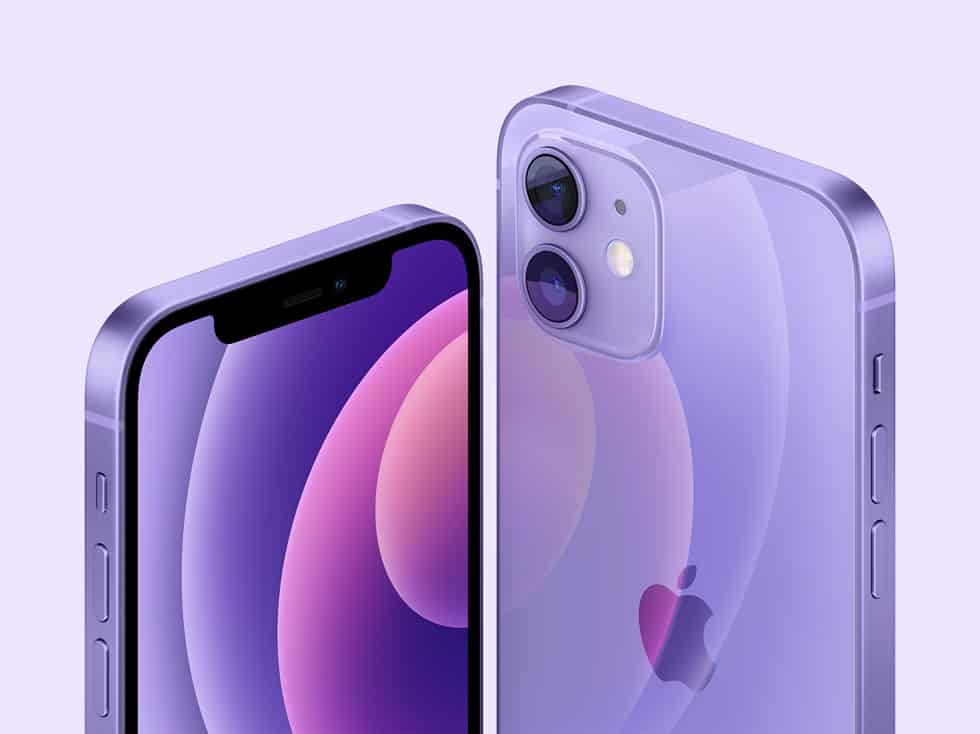
Design:
While one can almost dismiss industrial design as a distinguishing factor, the iPhone 12 somehow gets away with even more colors than the Pro-level models. The iPhone 12 has a slightly different chassis frame, with thinner screen bezels than the 12 Pro. Anodized aluminum is applied on the iPhone 12, and it feels very nice compared to the stainless-steel shiny frame that the Pro series uses. Alas, the back glass is not matte; it is polished , so it attracts fingerprints really easily.
Apple, meanwhile, uses a higher tier of new glass material, it is ceramically coated on the front. the new material, as Apple says, is 4 times more scratch-resistant than its predecessor.
Screen:
As mentioned before, iPhone 12 gets upgraded with an OLED 1170 x 2532 resolution, which is basically the same as the 12 Pro model. Even though it lacks a 120Hz refresh rate, the screen makes up for it with a 1200 nit max brightness and HDR support, so you end up getting an even better image quality than last year’s iPhone 11, by all means.
Display:
Well, right now the iPhone 12, it runs on a 6.1 inch Super Retina XDR display , and yeah it is kind of an upgrade compared to the iPhone 11 Liquid Retina panel. It’s an organic light emitting diode type screen that lands at 2532 x 1170 pixels , which translates to about 460 ppi density. In comparison with the older generation mode this OLED display does a better job with deeper blacks, stronger contrast ratios, and generally more vibrant colors.
It also backs HDR10 and Dolby Vision, so you’re mostly all set for high definition video, film streaming, or even those HDR stills . Peak brightness reaches 1200 nits, so visibility stays pretty solid even under direct sunlight. Then True Tone takes over, adjusting the display’s color temperature depending on the surrounding light, for a more natural sort of look. And wide color support, P3, helps keep color reproduction accurate and lifelike.
The first big-looking improvement of the iPhone 12 shows off just how much slimmer your bezels can have become since the flat-edge design. For that reason, this leads to an immersing experience since the screen truly dominates the front of the device. The notch for the front camera and Face ID sensors is still there, but, considering the overall screen size and quality, it is becoming a little less noticeable.
For display-diving die-hards, the iPhone 12 stands as one of the best screens in its category and renders a delight to use for everything from casual browsing to hardcore media consumption.
Camera:
In fact, the greatest change in iPhone 12 camera hardware is in the main camera, with an aperture increase from f/1.8 to f/1.6. But the A14 processor and Apple’s new image processing algorithm contribute the most toward greatly improved image quality.
Comparing this year’s iPhone models, the iPhone 12 and the mini version carry the same camera system. The 12 Pro has an extra telephoto camera plus a LiDAR sensor to assist with focus. The 12 Pro Max takes it a step further with a larger sensor for any upgrade.
Just like the 12 Pro, all cameras of the iPhone 12 support night mode even the front cameras. The algorithm has been improved to highlight low light and HDR shooting features. The iPhone’s ability to create low-light portraits places it above the iPhone 11. Overall, the camera quality is not that superior to most of the previous iPhones, specifically the iPhone 11, but that’s enough for the average user’s needs.
Performance and battery life
All the iPhone 12 series is based on A14 Bionic, the latest Apple’s chip, which is the first 5nm chip in any smartphone. It is now faster compared to any commercially available phone processor. There is no worry on efficiency for new iPhone models since the Apps run by iOS. Sometimes you won’t see a huge difference with that of iPhone 11 with A13, which again is very fast.
The new phone has a battery capacity of 10% less as compared to 11 but has a larger display. The battery life is still excellent particularly if 5G is turned off. Unfortunately, there is no proper test for battery life with 5G continuously on; however, in the review of 12 Pro while using 5G, the device has only 18% after an onscreen usage of 2.5 hours.
Software and User Experience
The iPhone 12 comes bundled with iOS 14, which contains what is hailed as all new features and improvements over its predecessors. Some of the more revolutionary changes consist of home screen widgets, the App Library, and improved privacy settings. Such additions make home screens customized with the right information in place and direct access to apps; App Library collects the installed apps inside a home-screen style interface without needing to scroll to find the desired application.
Siri, Messages, Maps, the ability to now watch videos while using other apps, and FaceTime calls can also be done in PiP mode, courtesy of iOS 14. The operating system is optimized for performance and efficiency, which covers the iPhone 12 to be fully stress-free even with complex tasks.
Another solid reason why the iPhone 12 may be very appealing to many consumers is Apple’s continued support in software updates. The company is expected to give users the additional features, security patches, and performance enhancements for the coming years with iOS updates. Such a support period is one of the main points why consumers consider the iPhone over Android, as this aspect from most Android devices is much shorter.
That overall experience in using the iPhone 12 is very accordant, and intuitive but does not forget simplicity or ease of use. Integrating into Apple’s ecosystem is also one of its strong points, allowing easy connection and sync of iPhone with other Apple devices like the Apple Watch, iPad, and Mac. Handoff, AirDrop, and iCloud kind of features are exemplary and enhance convenience and productivity while sharing content and continuing tasks across devices in the Apple ecosystem.
Adoption of 5G Connectivity
The iPhone 12 is packed with a bunch of upgrades, like 5G connectivity,and honestly it was among the first iPhones to roll in next-generation mobile networks. With faster download and upload speeds, plus lower latency, it also handles busy places a lot better ,which is a pretty big selling point. Basically the iPhone 12 is meant to be a future-proof device,so if you’re somewhere with wide 5G coverage you can take advantage of the capabilities in those new mobile networks.
The iPhone 12 works with most global 5G networks since it supports both the sub-6GHz and mmWave versions of 5G. In practice, a 5G network should make the iPhone experience feel quicker,so things like streaming high-definition videos, downloading those large files ,and online gaming can turn out smoother and more responsive.
However, even when 5G is established, there will be instances when users will not have an opportunity to fully take advantage of the complete 5G speeds, mainly in rural or underdeveloped areas. The connectivity will affect the battery since maintaining a stable connection requires more power. Apple is introducing an intelligent system within iOS that switches automatically between 5G and 4G LTE based on activity so as to preserve battery life where 5G speed is not needed.
Value Proposition and Pricing
The original price for the iPhone 12 was $799 in the 64GB version, with an increase in price with enhancement of storage. Mid-rangers from Android would undercut the iPhone 12 price, while the Pro models start at $999. It is, therefore, a good offer to the user who wants a flagship-level device without paying for the Pro series.
The iPhone 12 value system would be beholden to the circumstances of not only hardware but concerned software, ecosystem integration, and long-term support. The iPhone 12 obtaining a quality display, performing fast, having a versatile camera system, and 5G support for the future can do with a nice skin and durable build. For many users, that is more than just worth the price tag, especially when backing that trust in Apple means reliability and customer support.
When compared to other models in the iPhone 12 lineup , the standard iPhone 12 sort of lands in a sweet spot between the cost and the useful features . The iPhone 12 Mini comes with essentially the same things, just packed into a smaller form factor and with a discounted price too, but it probably wont suit people who actually want a larger display . On the other hand , the iPhone 12 Pro and 12 Pro Max bring extra camera features, LiDAR, and more premium materials, but the bill might not feel fully reasonable for everyone .
In the usual smartphone market , the iPhone 12 takes on stuff like the Samsung Galaxy S21 , Google Pixel 5, and OnePlus 9. Sure, each rival has its own small advantages and differences, still the iPhone 12 keeps its position in that pricing tier for reasons that feel pretty obvious, its design, its overall speed, and that software support you really cant ignore.
Pros and Cons
Pros:
Design: With that flat edge design , vibrant color options, and a premium build , the iPhone 12 is pretty nice to look at, while also feeling tough enough for everyday wear.
Display: The Super Retina XDR display is among the best you can find in this class, for starters it brings strong brightness, solid contrast, and lively colors , overall it just looks sharp.
Performance: The A14 Bionic chip makes it fast and responsive for every task, however taxing.
Camera: Excellent photos and videos from the dual-camera pack, thanks to Night Mode and Deep Fusion from computational photography.
5G Connectivity: 5G support means faster downloads and uploads with good future prospecting for the next generation of mobile networks.
Software: User-friendly interface, regular updates, and smooth function compatibility with other Apple devices are some attributes of iOS 14.
MagSafe: The feature makes life easier while also introducing a whole new ecosystem of accessories.
Cons:
Price: The iPhone 12 is now more affordable than the Pro models, but a few top-tier Android phones cost less, than the iPhone 12, kinda wild right.
No Charger Included: Apple’s choice to remove the charging brick from the purchase bundle means that a prospective user who does not already have a compatible charger will need to buy one.
No High Refresh Rate Display: Against some competitors, the lack of a high refresh display on the iPhone 12 may be a downside for those users with a penchant for smooth scrolling and animations.
Battery Performance: In terms of battery performance, enough with regard to many users, it is unlike to rival some swimming competition Android devices in 5G applications.
Conclusion
The aptly named iPhone 12 is in itself a rounded smartphone that offers perfect design, performance, and features which make it an absolutely compelling choice for the audiences across the board. The combination of high-quality display, A14 Bionic chip, versatile camera system, and future-proof 5G connection guarantee that increasingly remain difficult for us to compete in smartphone scenes.
For those who adore a top-end device but cannot afford the high-end prices of the iPhone Pro models, the iPhone 12 is a strong selling point for many people. It has many of the same features as other expensive phones, making it perfect for existing iPhone users looking to upgrade and new iPhone users entering the Apple ecosystem.
While not the most impressive point in every account, this phone is brilliant in striking an overall balanced and polished experience that is more difficult to beat. It appeals to the casual user; to the content creator; or to whoever just loves great technology – the iPhone 12 has it all, and will even exceed what are usually considered the limits of one’s expectations.
Apple iPhone 12, 64GB, Black – Fully Unlocked (Renewed): Buy it now
Apple iPhone 12 (256GB, Blue) [Locked] + Carrier Subscription: Buy it now
Related Posts



Tech Reviewer & Product Analyst
Định Bia has spent over 10 years testing consumer electronics with a focus on smart technology. He work as a product advisor at Biareview where he helped customers find the right devices for their needs. He personally tests every product featured on this site using a consistent evaluation framework covering quality, durability, and value. All reviews are based on experience, not influenced by the manufacturer.