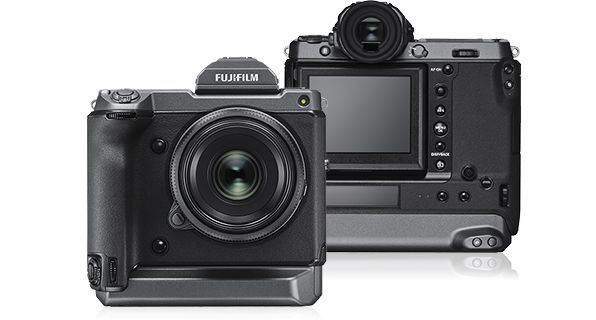
The GFX100, Fujifilm’s newest camera, was recently deemed the highest end ever, with the ability to generate images of up to 102MP resolution. It is said to be a product to “change the mirrorless camera game”, and indeed this machine possesses innumerable specialities to back this claim.
With its GFX100, Fujifilm places emphasis on a Medium Format BSI sensor with a diagonal size of 55mm, providing, 1.7 times larger image area than that of Full-frame sensors which feel premium.
Moreover, surely higher than that, the sensor resolution stands at about 102MP, and among the first larger-than-average Full-frame sensors with IBIS vibration resistance and phase-based focusing covering 100% of the frame.
The IBIS system compensates 5 stops for vibrations, which is quite vital for an even greater reason due to the camera’s very high resolution.
The full shutter is suspended through four springs to lessen any negative effects on picture quality. “This softly aids one in handheld capture but keeps fantastic high resolution of 100MP; the module dexterity is therefore increased.”
The GFX100 also boasts a staggering phase-focusing capability with 3.76 million points across the entire sensor area instead of just contrast focus points like its predecessors, the GFX50s and GFX50r. Thus, the system is 210% faster for such average models that also essentially work for Face AF and Eye AF.
The casing has an ultra-durable magnesium alloy body with 95 points reinforced with rubber for water and dust protection. As such, GFX100 is the first GFX model to have a built-in vertical grip.
“The GFX100 has a 2-layers build; such that sensors, vibration-proof systems and mounts were placed separately from their outer casing for retaining high durability as well as protecting the key part.”
The camera top holds a large information apparatus:
The back has a 3.2inch display screen with a resolution of 2.36 million points.
The two-way swiveling angle allows shooting from most difficult shooting angles in both vertical and horizontal.
The electronic viewfinder can be taken off for maximum compactness and convenience, with the added bonus of multi-directional rotation when attached, just like the following screen.
The GFX100’s near equal to a DSLR with a Full-frame sensor (15.6 × 16.36 × 10.29 centimeters), while not awfully heavy (1.36 kilograms). For comparison, the Canon 1D X Mark II measures 15.8 × 16.8 × 8.26 centimeters and weighs 1.53 kilograms.
As the first Medium Format for recording video at 4K30p with the F-Log 10bit 4:2:2 colour space, GFX100 boasts such features packed within for ease of use, including 2 UHS-II micros SD slots, mic and headphone ports, infamous Fuji film colour simulator, Wifi, Bluetooth and tethered capture with Capture One.
Fujifilm GFX 100 102MP Medium Format Digital Camera (Body Only): Buy it now
Performance
Image Quality
The 102-megapixel sensor is really the headline feature on the GFX 100 — enough resolution that you can crop hard into a file and still find usable detail. That sensor size also buys you real depth-of-field control: proper background separation, not the shallow-but-slightly-blurry look smaller sensors give you. Dynamic range is where it really earns its price tag, though — pull detail out of a blown sky and a shadowed foreground in the same frame without either one falling apart.
Low Light
The camera shines in low light and because of this speed-moving big sensors gather light excellently. Add in-body stabilization into the mix and one has an unbeatable combination. The GFX 100 does very well, maintaining detail and low noise at high ISO settings-it shoots superb nighttime and difficult lighting scenario pictures.
Autofocus
Those judging the GFX 100 on speed and accuracy will love the hybrid autofocus system, which employs both phase-detection and contrast-detection points to cover as much area as possible within the frames of detection. The camera’s face and eye detection provide great results for portraiture, where the focus is primarily on the subject’s eye. Although not able to perform its wonders in low light levels, the camera’s autofocus is still reputed as an all-purpose machine.
Video Performance
The camera’s 4K video recording capabilities are amazing, producing excellent, clear, and highly detailed footage. There is significant internal 10-bit 4:2:2 recording providing color information for post-production. In addition, the camera’s ability to record in F-Log provides greater flexibility in color grading and is ideal for professional video projects.
Battery Life
Gfx 100 operates from an NP-T125 battery, which is surfaced with a good quantity of shooting time, so that generally, a day’s shooting will last but for the working professionals who shoot intensively or record video shoot longer, a battery or so might be needed. By being able to charge via USB-C plug, this camera could also be used easily for on-the-go recharging.
User Experience
Setup and Navigation
Because it has a menu system that is fairly self-evident as well as controls that are logically laid out, the Fujifilm GFX 100 has been set up easily. There is much room for customization or adaptation to suit an individual’s preferences in terms of what to include, which makes setting up this camera pretty easy for different shooting situations. The large LCD touchscreen offers a well-responsive interface for easy navigation through menus and setting adjustments, and image review.
Yi Home Application Integration
The GFX 100 pairs with Fujifilm’s own Camera Remote app rather than anything third-party — from your phone or tablet you can trigger the shutter, pull images off the camera, or adjust settings without touching the body itself. The features of the app are designed to be user friendly, increasing overall shooting experience by providing an added measure of flexibility and convenience.
Viewfinder and LCD Screen
The high resolution of the EVF and LCD contributes to a nice experience when using the GFX 100. The way EVF shows the scene is quite clear and without lag and with very good color fidelity on it. And the sharpness and size of the LCD screen made it very advantageous for reviewing and going through the menus whenever you are using touch controls. Both the EVF and LCD are very much usable in a variety of shooting conditions, whether for bright outdoor or low-light conditions.
Lens Compatibility
The GFX 100 runs on Fujifilm’s G-mount system, and the lens lineup is one of the real strengths of shooting this camera sharp, well-built glass spanning wide-angle through telephoto, so going medium format doesn’t mean giving up focal length options the way it might have a decade ago.
Comparing Competitors
Fujifilm GFX 100 vs. Phase One XF IQ4
These two cameras are both top of the line in the medium format imaging and therefore direct competitors. The major points between the two:
Resolution: The Phase One XF IQ4 tops out even higher, at 150 megapixels versus the GFX 100’s 102.
Price: And you pay for it — the IQ4 costs considerably more, which tracks given the sensor and the specialized feature set built around it.
Versatility: The GFX 100 wins on practicality. It’s the camera you can actually carry around; the IQ4 is built for a studio, and that’s mostly where it stays.
GFX 100 vs. Hasselblad X1D II 50C
Hasselblad’s X1D II 50C is the other camera that gets mentioned in this conversation.
Resolution: 50 megapixels — half the GFX 100’s count, if resolution is your main concern.
Design: The X1D II is smaller, lighter, and better-looking to most people’s eyes, if you care about carrying a camera that also looks good doing it. The trade-off: the GFX 100 has better weather sealing and holds up better if you’re actually shooting outdoors in bad conditions.
Autofocus: It provides a much better score than that of the X1D II 50C overall, and its speed for most of the time would be better than the GFX 100’s. The GFX 100 generally considered far faster and better in terms of its advanced features of phase-detection points. The GFX 100’s autofocus features seem to have better tracking capacities; in contrast, the X1D II 50C is still dependent on simple contrast-detection, which slows the focus, particularly under difficult-light conditions.
Video Capability: The GFX 100 wins the battle in recording videos, as this can shoot videos in 4K UHD and even support 10-bit 4:2:2 internal recording. The X1D II 50C was designed as a stills-orientated camera-with very limited video functionality.
Fujifilm GFX 100 vs. Sony A7R IV
The Sony A7R IV packs 61 megapixels into a full-frame sensor — genuinely high resolution for its class, just not in the same league as the GFX 100’s 102-megapixel medium format sensor.
It’s less “A7R IV loses” and more “different category entirely”: full-frame’s ceiling is lower than medium format’s by design, sensor size aside from megapixel count.
Size and Portability: Finally, the A7R IV is far more compact and light compared to the larger GFX 100, making this model a more portable one. The larger dimensions of the GFX 100 are due to the size of the medium format sensor, which also weighs into the amount by which camera weighs.
Autofocus: The A7R IV utilizes a very sophisticated autofocus system with 567 phase-detection points and 425 contrast-detection points, highly effective with different shooting scenarios. Although, the autofocus system of the GFX 100 is benefiting from its hybrid approach and advanced tracking capability.
Video Features: The A7R IV supports recording in 4K video, but with focus on 8-bit recording as opposed to the GFX 100’s 10-bit 4:2:2 internal recording for the professionals. GFX 100’s video features are altogether the most.
Strengths and weaknesses
Strengths
The 102-megapixel sensor is really the entire pitch here, resolution and dynamic range good enough that this makes sense for commercial work or landscapes, the kind of shooting where image quality isn’t negotiable.
In-body stabilization gets you up to 5.5 stops, and it earns its keep most with longer lenses, where handshake gets magnified and would otherwise force you onto a tripod for anything but bright daylight.
Advanced autofocus system: Fast and accurate hybrid autofocus performs various tasks such as face and eye detection for versatility in different photographic styles.
Robust build quality: The magnesium alloy body with weather sealing gives strength and reliability in difficult surroundings, which steers its use towards the professional end.
High-resolution EVF and LCD: Clear, sharp looking through the 5.76-million-dot EVF and easy navigation on the 3.2-inch LCD further the pleasurable shooting experience.
4K video recording: The recording capability of the GFX 100 in 4K, with 10-bit in the profession realm, holds very good standing.
Weaknesses
Size and weight: The GFX 100’s size and heft can be an impediment, especially for photographers concerned with portability. Travel and handheld shooting with it are tougher than with a compact mirrorless option.
High cost: The GFX 100, being quite an investment, is basically out of reach for some photographers. This cost, of course, is a testament to its advanced features and high resolution, but it is an inhibition for a hobbyist or whomever that is budget-conscious.
Battery life: The NP-T125 battery is decent, but should one be shooting extensively or even recording video, carrying some more batteries is almost a must.
Limited lens options: Although Fujifilm GFX system lens offerings are increasing, the number of lenses may not be as significant as some other systems, limiting options for certain types of photography.
Recording limitations for video: The GFX 100 has no 6K/8K recording which could turn off high-end video making specialists. Nevertheless, it still supports 4K recording in ultra-high-quality video way.
Conclude
The Fujifilm GFX 100 isn’t just a digital camera for medium-format photography; it shines within that space. The combination of a 102-megapixel sensor, features, and solid build quality promises one thing: pure, high-resolution imaging. The detail and dynamic range make it the ultimate choice for professional photographers with the highest requirements for image quality.
Image stabilization, autofocus performance, high-resolution, and the versatility-and yeah, a brilliant 4K video-all support what goes into making it such a flexible camera for different shooting situations.
Considerations will have to be made if gaffer’s compact and weighty, hefty price-tag might matter to a few. Yes, the largeness of the body and the price of the camera may not benefit everyone’s budget, not to mention that it has also limited lenses and battery lives depending on whose needs are subjective.
Professionals in need of outstandingly high pixel count combined with quality performance while using this kind of expensive camera dig beneath its reach in terms of availability and cost for other high-end shooting cameras, all of which are still found in the powerfully formulated Fujifilm GFX 100.
An eye-opener that delivers on its promise to bring home finer quality images together with a myriad of features and usability factors one might want in a professional camera has to be the Fujifilm GFX 100.



Tech Reviewer & Product Analyst
Định Bia has spent over 10 years testing consumer electronics with a focus on smart technology. He work as a product advisor at Biareview where he helped customers find the right devices for their needs. He personally tests every product featured on this site using a consistent evaluation framework covering quality, durability, and value. All reviews are based on experience, not influenced by the manufacturer.